Table of Content

Introduction
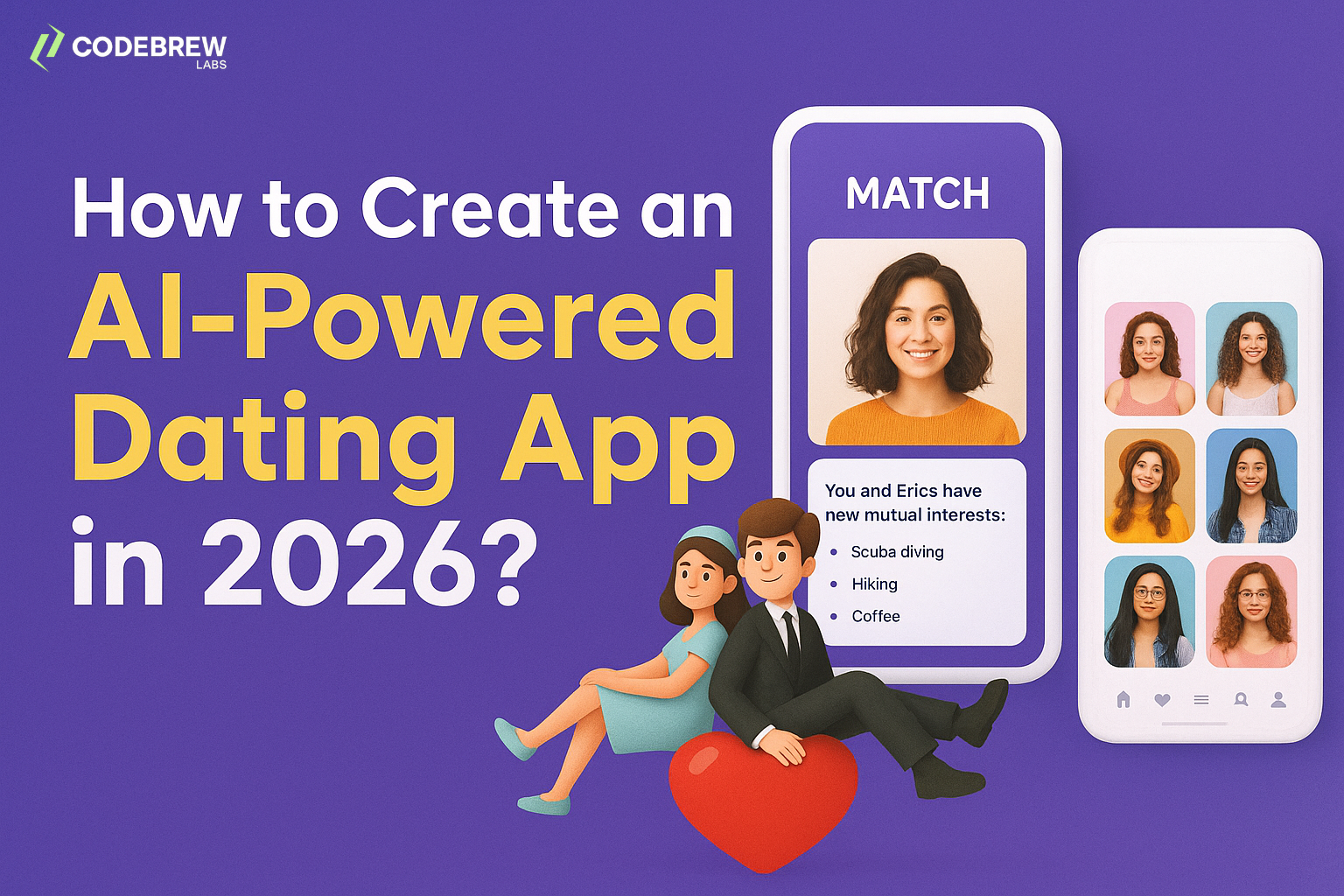
The world of online dating has evolved far beyond swiping left or right. As we step into 2026, the digital dating landscape is more dynamic, intelligent, and inclusive than ever before. From AI-driven matchmaking to video-based connections and niche communities, dating apps are reshaping how people meet, interact, and build relationships in the modern world.
Table of Content
According to Statista, the online dating industry is projected to surpass $10 billion in global revenue by 2026, fueled by a surge in mobile-first users and increased acceptance of online relationships. In fact, more than 350 million people worldwide now use dating apps — a number that continues to rise with each passing year.
The demand for digital companionship has also been accelerated by social shifts, remote lifestyles, and the normalization of digital-first interactions. For entrepreneurs and startups, this presents a golden opportunity to enter one of the most profitable and engaging app markets globally. By leveraging AI dating app development services, businesses can create smarter, more personalized platforms that deliver meaningful matches, enhance user trust, and redefine digital connections in 2026 and beyond.
Why Building a Dating App Is a Lucrative Idea in 2026
Building a dating app in 2026 isn’t just about capitalizing on a trend — it’s about understanding human connection through technology. With millennials and Gen Z driving over 70% of app-based relationship interactions, there’s a growing appetite for innovation that makes dating more authentic and personalized.
Moreover, the integration of AI in dating app development is transforming how matches are made. Instead of relying solely on user-input preferences, modern apps analyze user behavior, shared interests, and communication patterns to predict compatibility. This intelligent use of data not only enhances user satisfaction but also boosts app retention rates — a critical factor for long-term success.
Popular platforms like Tinder, Bumble, and Hinge continue to dominate the market, but each one follows a unique model:
- Tinder revolutionized casual dating with its swipe-based simplicity.
- Bumble empowered women by giving them control over initiating conversations.
- Hinge positioned itself as “the dating app designed to be deleted,” focusing on meaningful relationships.
These success stories demonstrate that while the dating market is competitive, there’s ample room for innovation — especially for apps that bring fresh ideas to matchmaking, safety, inclusivity, or niche communities.
What This Guide Will Cover
This comprehensive Dating App Development Guide 2026 will walk you through every step of creating a successful dating app — from researching your niche and understanding user psychology to choosing the right tech stack, integrating AI algorithms, and designing a scalable business model.
By the end of this guide, you’ll have a complete roadmap to build a next-generation dating platform that not only attracts users but also keeps them engaged, safe, and connected in a rapidly evolving digital era.
Understanding the Dating App Market in 2026
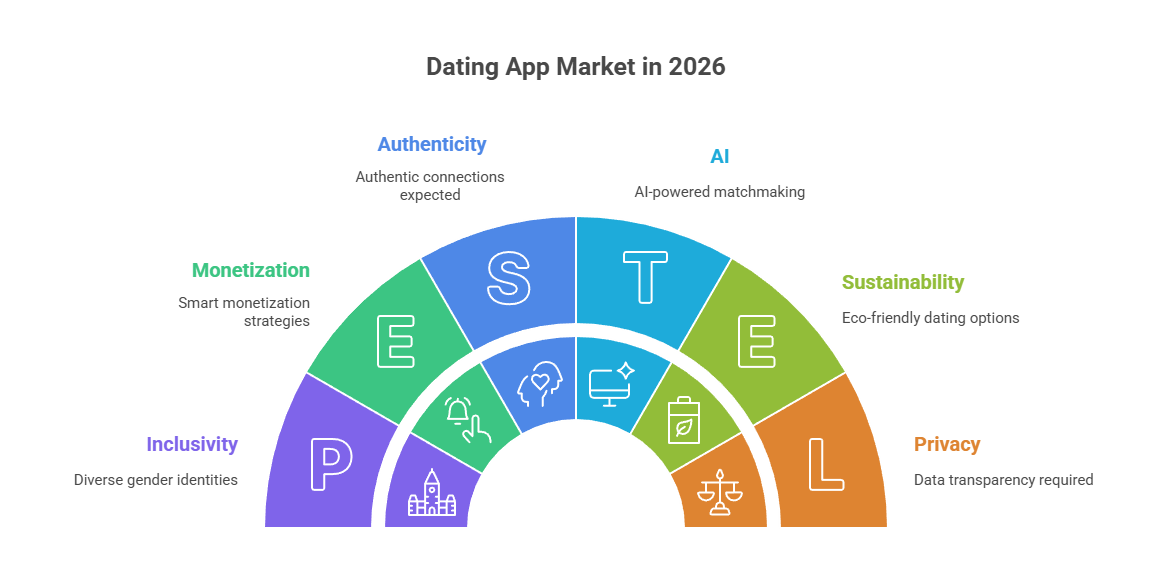
Before jumping into development, it’s essential to understand the landscape you’re entering. The dating app market in 2026 is not only thriving but also undergoing massive transformation — powered by technology, personalization, and changing relationship dynamics.
Latest Trends Shaping the Dating App Industry
The future of dating apps is being shaped by innovation and inclusivity. Here are the key trends defining the market in 2026:
- AI-Powered Matchmaking:
Artificial Intelligence is the backbone of modern dating platforms. By analyzing user behavior, interests, chat patterns, and even emotional cues, AI helps improve match accuracy. This has made AI in dating app development an essential component for startups aiming to deliver smart, personalized experiences. - Video-Based Dating:
Post-pandemic social behaviors made video interaction a norm. Apps are now incorporating live video chats, virtual dates, and short video profiles to help users connect more authentically before meeting in person.
- Niche Dating Communities:
From vegan dating and pet lover platforms to apps designed for specific faiths or lifestyles, niche dating apps are gaining traction. These platforms target well-defined audiences seeking like-minded partners — reducing mismatch rates and improving engagement. - Gamified Experiences:
Many apps are introducing gamified interactions — like daily challenges, quizzes, and in-app events — to make dating fun and engaging. Gamification also increases retention and helps users spend more time on the app. - Focus on Safety and Authenticity:
With growing concerns about fake profiles and scams, dating apps now prioritize safety through profile verification, AI-driven photo moderation, and real-time identity checks.
Evolving User Expectations
In 2026, users expect more than just a swiping interface. They want authentic connections, data transparency, and personalized matches that go beyond superficial attraction.
Modern daters also prefer apps that value diversity, inclusivity, and privacy. They are drawn to platforms that understand individuality — not just by demographics, but by lifestyle, beliefs, and emotional compatibility.
Additionally, the new generation of dating apps must ensure efficiency — users expect quick onboarding, real-time responses, and minimal friction throughout the journey.
Market Segmentation
The dating industry is diverse, catering to different emotional needs and cultural preferences. Broadly, dating apps can be segmented into:
- Casual Dating Apps: For users seeking short-term or non-serious relationships (e.g., Tinder, Pure).
- Serious Relationship Apps: Focused on long-term commitment and compatibility (e.g., Hinge, eHarmony).
- Niche Dating Apps: Built for specific communities, interests, or lifestyles (e.g., Christian Mingle, HER, FarmersOnly).
- LGBTQ+ Dating Platforms: Inclusive apps catering to diverse gender identities and orientations (e.g., Grindr, Taimi).
- Community-Based Dating Apps: Platforms connecting people within a shared interest or cultural circle.
Understanding these categories helps developers define their unique value proposition and target the right audience effectively.
Competitive Analysis: What Makes Leading Apps Successful
Leading dating apps thrive because they balance user experience, innovation, and trust. For instance:
- Bumble’s women-first approach redefined online safety and empowerment.
- Hinge’s conversation-first design encourages deeper connections.
- Tinder’s algorithm and gamified UX keep users engaged through micro-interactions.
Each successful app identifies an emotional gap in the market and addresses it with a strong brand identity, personalized technology, and smart monetization.
For new entrants, the takeaway is clear: success in 2026 requires more than building an app — it’s about crafting a meaningful digital experience that evolves with users’ emotional and social needs.
Types of Dating Apps
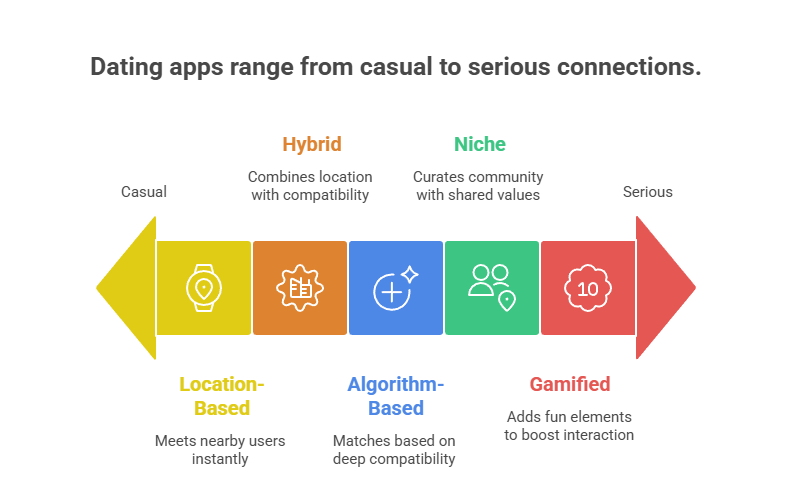
Before diving into development, it’s crucial to decide what type of dating app you want to build. Your app’s model, target audience, and unique value proposition will determine not only the features but also the user experience and monetization approach.
The dating landscape in 2026 is incredibly diverse, offering multiple app types that cater to different relationship goals and social behaviors.
1. Location-Based Dating Apps
These apps use GPS technology to match users based on their proximity — allowing people to meet others nearby in real time. Tinder, Happn, and Grindr are prime examples of this model.
- How it works: The app detects user location and suggests profiles within a chosen radius.
- Why it works: Instant connectivity and convenience drive engagement.
- Best for: Casual dating, spontaneous connections, and social discovery.
In 2026, location-based apps are becoming even smarter with AI in dating app development, as machine learning algorithms can recommend nearby users with shared interests or habits, not just proximity.
2. Algorithm-Based Dating Apps
Apps like OkCupid and eHarmony rely heavily on algorithms to calculate compatibility. These algorithms use questionnaires, behavioral data, and user feedback to suggest potential matches.
- How it works: Users answer a series of questions; the system analyzes compatibility scores.
- Why it works: Focused on long-term relationship building and psychological compatibility.
- Best for: Serious relationships and users seeking meaningful matches.
The rise of artificial intelligence and predictive analytics has made this model more efficient than ever. In modern platforms, AI in dating app development enables predictive matching by learning user preferences over time, improving accuracy with every interaction.
3. Niche Dating Apps
Niche apps serve specific groups, lifestyles, or interests — from religion and profession to hobbies and values. Examples include Christian Mingle, HER, and Elite Singles.
- How it works: The app curates a focused community and matches users who share common goals or beliefs.
- Why it works: Niche targeting leads to higher engagement and stronger emotional connection.
- Best for: Audiences with distinct identities or lifestyles seeking like-minded partners.
In the Dating App Development Guide 2026, this category is one of the most promising for startups. Niche dating apps require smaller marketing budgets yet attract highly loyal user bases, making them ideal for sustainable growth.
4. Hybrid Dating Apps
Hybrid apps combine location-based discovery with algorithmic matchmaking to provide the best of both worlds. Apps like Hinge and Badoo fall into this category.
- How it works: Users find nearby matches, while AI refines suggestions using behavioral data.
- Why it works: Merges spontaneity with long-term compatibility.
- Best for: Users who want flexibility — from casual chats to serious dating.
With advanced analytics and user modeling, hybrid platforms are expected to dominate the market by 2026 due to their adaptability and personalized approach.
5. Gamified Dating Apps
Gamified platforms make dating more fun and engaging by incorporating elements like quizzes, challenges, leaderboards, or rewards. Badoo and newer entrants often use this technique to increase retention.
- How it works: Users earn points or badges by interacting, completing profiles, or initiating conversations.
- Why it works: Encourages consistent engagement and reduces user fatigue.
- Best for: Gen Z audiences who prefer entertainment-driven experiences.
Gamification, combined with AI in dating app development, creates an immersive and emotionally rewarding experience — making users feel more invested in their matches.
How Dating Apps Work: The Core Mechanics
To build a dating app that competes in today’s market, it’s vital to understand how these platforms function behind the scenes. Successful dating apps blend psychology, design, and data science to make human connection seamless and enjoyable.
Below is an in-depth look at the core mechanics that drive user engagement and retention.
1. Account Creation & Onboarding
The first impression matters. A seamless onboarding flow can determine whether users stay or leave.
- Social sign-ins: Users can sign up via Google, Apple, or social media for convenience.
- Profile setup: Encourages adding photos, bios, and interests for personalization.
- Preference settings: Users define what they’re looking for — age, location, interests, or gender identity.
Modern onboarding processes use AI-assisted suggestions to help users craft better profiles or even auto-generate bios based on interests, making the experience faster and more engaging.
2. Profile Discovery & Matching
Once profiles are set up, the app begins suggesting potential matches. This step is where AI in dating app development plays a transformative role.
- Rule-based matching: Uses filters like age, location, or interests.
- AI-driven matching: Learns from behavior — swipes, chat frequency, and engagement — to predict compatibility.
- Recommendation engine: Continuously adapts as user preferences evolve.
Apps like Hinge and OkCupid are already using machine learning algorithms to offer compatibility scores and tailored recommendations, helping users find better matches over time.
3. Swipe, Like, and Connect
This is the heart of most dating apps — a simple yet addictive user experience. Swiping left or right, liking profiles, or using unique gestures to express interest forms the app’s interactive layer.
Modern apps are experimenting with voice interactions and AI-powered conversation starters, allowing users to connect more naturally. For example, an AI system might suggest icebreakers based on both users’ interests or previous conversations.
4. Messaging and In-App Communication
Once two users match, the app facilitates communication through:
- Text chat (standard and disappearing messages)
- Voice or video calls
- GIFs, stickers, and multimedia sharing
- AI chat assistants to help initiate or guide conversations
In 2026, developers are focusing on context-aware chat systems — AI that can analyze tone and suggest appropriate responses, helping users keep conversations going smoothly.
5. Push Notifications and Engagement Loops
To retain users, dating apps use smart notification systems. These reminders encourage users to reply, check messages, or explore new matches.
AI can now optimize notification timing based on user activity patterns, ensuring messages arrive when engagement is most likely — without being intrusive.
6. Safety, Privacy & Moderation
With growing concerns about online safety, modern dating apps implement:
- Photo and identity verification using AI and biometrics
- Profile moderation systems to detect fake or offensive content
- Encryption to secure user data and messages
- Block and report features to maintain a healthy user environment
Transparency and trust are key — users today prefer apps that openly share their data protection measures.
7. Analytics and Feedback Systems
On the backend, dating apps continuously analyze performance through user analytics:
- Match success rates
- Session duration and retention metrics
- Feedback loops for improvement
AI helps identify drop-off points and user frustrations, allowing developers to enhance the experience iteratively.
Key Features to Include in a Dating App
The success of any dating app lies in the features that define user experience, safety, and engagement. Whether you’re building a simple MVP or a feature-rich platform, focusing on the right functionality is what sets your app apart in a crowded market.
In this section of our Dating App Development Guide 2026, we’ll explore the essential and advanced features you need to include for a modern, scalable, and user-centric dating application.
User-Side Features
1. Seamless Registration and Onboarding
First impressions are crucial. Offer a quick and intuitive sign-up process via email, phone, or social logins (Google, Apple, or Facebook). The smoother the onboarding, the higher your retention rate.
Modern apps also leverage AI-based recommendations to auto-suggest bios, profile tags, or interests, making it easier for users to complete their profiles.
2. Profile Creation and Verification
Users should be able to customize their profiles with photos, bios, and preferences. Implement AI-driven photo moderation and face recognition for authenticity checks. Verified profiles enhance trust and minimize fake accounts — a major concern in dating platforms.
3. Smart Matching Algorithms
Gone are the days of random swiping. The best apps now use AI in dating app development to analyze behavior, interests, and communication patterns to deliver accurate matches.
AI can identify subtle compatibility cues — like shared humor or conversation tone — to make better predictions over time.
4. Search Filters and Preferences
Allow users to filter by interests, age, location, or relationship goals. Adding advanced filters like “values,” “hobbies,” or “lifestyle” can help users narrow down potential matches and increase satisfaction.
5. Real-Time Chat and Video Calling
Once matched, users need multiple ways to interact — from text and GIFs to voice and video calls. Video-based communication has become a standard in 2026, offering a more authentic pre-meeting experience.
6. Push Notifications and In-App Alerts
Smart push notifications powered by machine learning can remind users about messages, new matches, or engagement opportunities without being intrusive.
7. Safety Features
User safety and data privacy should be top priorities. Include:
- Profile verification badges
- “Block” and “Report” options
- End-to-end encryption for chats
- AI-based content moderation to detect suspicious behavior
These features help foster a secure environment and build user trust — one of the most valuable currencies in dating apps.
Planning to create your own dating app with AI-powered features?
Admin-Side Features
1. Dashboard Management
Admins should have full control over user accounts, content, analytics, and reports. A centralized dashboard allows easy monitoring of user activity and platform performance.
2. Content Moderation Tools
AI-powered moderation systems automatically detect and remove inappropriate messages, images, or fake profiles — minimizing manual review efforts.
3. Analytics and Insights
Advanced analytics dashboards help track key metrics such as user growth, engagement rates, and churn. Data-driven insights are crucial for improving user experience and retention.
4. Subscription and Monetization Management
Admins should have tools to manage subscription tiers, pricing, and promotions. Integration with payment gateways ensures smooth in-app purchases and premium upgrades.
Advanced Features Trending in 2026
1. AI-Driven Matchmaking
AI is revolutionizing the dating experience. From personality analysis to emotional compatibility, AI in dating app development helps tailor matches with exceptional accuracy. It analyzes everything — swipes, messages, responses, and even sentiment — to understand what users genuinely want.
2. Voice and Video Profiles
Short video intros and voice prompts allow users to express themselves authentically, making profiles more engaging and transparent.
3. Gamification Elements
Incorporate games, quizzes, or challenges that users can play together to break the ice. Gamified features also enhance user retention and satisfaction.
4. Integration with Wearables and AR/VR
By 2026, dating apps are exploring integrations with smart wearables and AR/VR technologies, offering immersive virtual dating experiences that bridge the gap between online and offline worlds.
5. AI Chat Assistants
AI-powered chat assistants can help users craft messages, suggest conversation starters, and analyze compatibility in real time. This innovation significantly reduces first-message anxiety and enhances engagement.
A great dating app doesn’t just connect people — it facilitates meaningful experiences through intuitive design, personalization, and advanced technology. Every feature should contribute to making users feel safe, understood, and excited to engage.
Step-by-Step Process to Create a Dating App
Now that you understand the essential features, it’s time to explore how to create a dating app from scratch. This process combines market research, design thinking, and technological innovation — all aligned with your app’s purpose and target audience.
Below is a step-by-step roadmap that every startup or business should follow to ensure successful development and launch.
Step 1: Research and Identify Your Niche
Start with a deep understanding of your audience. Decide whether your app will focus on casual dating, serious relationships, or niche communities. Conduct competitor analysis, user surveys, and market validation before development.
Defining a niche helps you stand out and attract a loyal user base early on.
Step 2: Define Your Business Model and Target Audience
Determine how your app will generate revenue — freemium, subscription-based, or ad-supported. Your monetization model should align with user expectations and long-term engagement goals.
Identify your target audience based on age, interests, relationship goals, and region. A well-defined audience ensures focused marketing and better retention.
Step 3: Design the User Experience (UI/UX)
User experience can make or break a dating app. Prioritize:
- Minimalist design
- Intuitive navigation
- Fast onboarding
- Inclusive language and visuals
Your UI should make users feel comfortable, safe, and excited to explore. Micro-animations and gamified visuals can make interactions more rewarding.
Step 4: Choose Your Tech Stack
Select technologies that ensure speed, scalability, and security.
- Frontend: React Native, Flutter, Swift, or Kotlin
- Backend: Node.js, Django, or Ruby on Rails
- Database: Firebase, PostgreSQL, MongoDB
- AI/ML tools: TensorFlow, PyTorch, or Scikit-learn (for smart matching)
- Hosting & Storage: AWS or Google Cloud
Incorporating AI in dating app development at this stage allows you to personalize experiences, optimize match suggestions, and improve content moderation from day one.
Step 5: Build the MVP (Minimum Viable Product)
Start small by developing an MVP that focuses on the core functionalities — registration, profile setup, matching, and messaging.
This helps test user response, validate features, and minimize costs before a full-scale rollout.
Step 6: Implement AI-Powered Matchmaking
Use machine learning models to analyze user activity, chat frequency, and match success rates. Over time, your AI algorithm becomes smarter, delivering more accurate matches and personalized recommendations.
Step 7: Integrate Safety and Privacy Measures
Trust is the cornerstone of successful dating apps. Use encryption protocols, two-factor authentication, and AI-based photo verification to safeguard users. Clearly communicate your data privacy policies to build confidence.
Step 8: Test Thoroughly
Conduct multiple rounds of testing — functional, usability, and security testing. Beta testing helps you collect real-world feedback from early adopters and refine features before launch.
Step 9: Launch and Market Your App
A successful launch strategy combines buzz-building and user acquisition:
- Social media teasers and influencer marketing
- Referral bonuses for new sign-ups
- Partnerships with lifestyle brands or communities
Make sure to optimize your App Store listings for visibility and engagement.
Step 10: Maintain, Analyze, and Scale
Post-launch, continue refining features based on analytics and feedback. Track engagement metrics like retention rate, session duration, and churn.
As user volume grows, scale your app’s infrastructure and introduce advanced features like AI-driven recommendations or video-based dating rooms.
Developing a successful dating app in 2026 requires a balance of creativity, technology, and empathy. By following these steps, you can build a platform that not only connects people but redefines how modern relationships begin in the digital age.
Choosing the Right Tech Stack for Dating App Development
The success of your dating app depends largely on its tech foundation. A strong and scalable tech stack ensures fast performance, seamless matchmaking, robust security, and flexibility to integrate features like AI-based recommendations or real-time video chats. Since this is a Dating App Development Guide 2026, it’s crucial to align technology choices with the latest development standards and emerging user expectations.
Frontend Development (User Interface)
The frontend is where users interact with your app — swiping, chatting, matching, and browsing profiles.
- Frameworks & Tools: React Native, Flutter, or Swift (iOS) and Kotlin (Android) are the most common choices.
- Why it matters: Cross-platform frameworks like Flutter and React Native allow you to build one app for both Android and iOS, saving time and costs while maintaining a native-like performance and visual quality.
- UI/UX priorities: Focus on intuitive navigation, responsive design, and minimal load times. Incorporate features like smooth animations and micro-interactions for better engagement.
Backend Development (Server-Side)
The backend powers data flow, authentication, and matchmaking logic.
- Languages: Node.js, Python (Django/Flask), Java (Spring Boot), or GoLang.
- Databases: Use PostgreSQL or MongoDB for flexible, scalable data storage. Redis is ideal for caching real-time data such as chat messages or online statuses.
- Server Management: Cloud platforms like AWS, Google Cloud Platform (GCP), or Microsoft Azure provide auto-scaling and high availability.
- Key integrations: Real-time chat APIs (Socket.io, Firebase), geolocation services (Google Maps API), and push notification services (OneSignal, Firebase Cloud Messaging).
Artificial Intelligence and Machine Learning
AI in dating app development has redefined how platforms understand users and improve match quality.
- Use cases:
- Personalized matchmaking using behavioral analysis
- Chat moderation and content filtering
- Predictive compatibility scores
- AI-powered profile recommendations
- Personalized matchmaking using behavioral analysis
Security and Compliance
Dating apps handle sensitive user data, so strong security measures are non-negotiable.
- End-to-end encryption for messages
- Secure payment gateways (Stripe, PayPal, Razorpay)
- GDPR and CCPA compliance for data privacy
- Multi-factor authentication for safer logins
Scalability and Performance
Use microservices architecture to handle large user volumes efficiently. This allows independent scaling of chat, search, and matching modules. A Content Delivery Network (CDN) like Cloudflare ensures faster content delivery globally.
In short: The ideal tech stack in 2026 combines cross-platform flexibility, real-time responsiveness, AI-driven intelligence, and top-tier security — forming the backbone of a reliable and engaging dating experience.
Monetization Models for Dating Apps
Once your dating app attracts users, the next challenge is building a sustainable revenue model. The good news is that dating apps have some of the highest monetization potential in the app ecosystem. The global dating app market thrives on freemium strategies, microtransactions, and subscription models that cater to diverse user preferences and spending habits.
1. Freemium Model
Most dating apps — including Tinder, Bumble, and Hinge — follow the freemium model. The app is free to download and use with limited access, while premium tiers offer enhanced features such as:
- Unlimited swipes or matches
- Advanced filters (location, lifestyle, interests)
- Profile boosts and super likes
- See who liked your profile
Freemium keeps entry barriers low while encouraging loyal users to upgrade for convenience and visibility.
2. Subscription Plans
Subscription models generate consistent monthly or annual revenue.
- Examples: Tinder Plus/Gold, Bumble Boost/Premium
- Offer tiered pricing for different benefits such as ad-free experience, priority matching, or personalized AI recommendations.
- In 2026, users increasingly prefer flexible, value-driven subscriptions over one-time purchases.
3. In-App Purchases
Microtransactions are a popular monetization stream.
- Examples: Buying coins, match boosts, profile themes, or exclusive stickers.
- These small but frequent purchases can significantly increase lifetime customer value (LTV).
4. Ads and Partnerships
Monetizing through in-app ads or brand partnerships remains viable — but subtlety is key.
- Use native ads that blend with app content instead of intrusive pop-ups.
- Collaborate with lifestyle brands, dating coaches, or entertainment platforms for contextual partnerships that enhance rather than disrupt the experience.
5. Event-Based Monetization
With the rise of hybrid dating trends (virtual and real-world), apps now host virtual meetups, matchmaking events, and speed-dating sessions.
- Monetize through ticket sales or sponsorships.
- These events help strengthen community engagement while generating extra income.
6. AI-Driven Personalization Packages
In 2026, personalization sells. By leveraging AI in dating app development, you can introduce premium AI-powered features:
- Smart date recommendations based on mood or location
- Personality-driven compatibility insights
- AI chat assistants for smoother interactions
These advanced tools create unique value propositions that justify higher subscription tiers.
Looking for expert AI dating app development services?
Design & User Experience Best Practices
When it comes to dating apps, design and user experience (UX) often make the difference between a thriving platform and one that fails to engage users. In 2026, where competition is fierce and users have high expectations, crafting a clean, emotionally intelligent interface is crucial for user retention and satisfaction.
Modern dating apps are no longer just about swiping left or right — they’re about building trust, comfort, and emotional connection through a digital environment that feels authentic and inclusive.
1. Minimalist, Intuitive Interface
A clutter-free, visually appealing design ensures users can focus on what truly matters — finding meaningful matches.
- Use ample white space, balanced colors, and readable typography.
- Keep navigation straightforward — profile browsing, chatting, and settings should be accessible within two to three taps.
- Implement smart animations and progressive disclosure (showing information gradually) to avoid overwhelming new users.
2. Smooth Onboarding Flow
First impressions matter. A well-designed onboarding flow can make users feel welcomed and confident.
- Offer quick sign-up options via Google, Apple, or social media accounts.
- Introduce guided tutorials or progress indicators for profile setup.
- Use AI in dating app development to personalize onboarding — for example, suggesting interests, profile prompts, or match filters based on early user input.
A smooth start increases engagement rates and reduces early app abandonment.
3. Inclusive and Gender-Neutral Design
Today’s dating ecosystem celebrates diversity and individuality. To remain relevant, dating apps must embrace inclusive and gender-neutral design principles.
- Provide multiple gender and orientation options beyond binary categories.
- Allow users to express pronouns, preferences, and relationship goals openly.
- Ensure algorithms are bias-free, offering fair exposure to all profiles regardless of identity or background.
Inclusivity isn’t just a social responsibility — it enhances brand trust and widens your potential user base.
4. Use of Micro-Animations and Gamification
Micro-animations and gamified interactions keep users engaged while adding delight to the experience.
- Use subtle animations for swipes, matches, or message reactions.
- Add gamified elements such as streaks, badges, or “compatibility scores” to encourage consistent app use.
- Implement AI-driven gamification, where personalized challenges or achievements motivate users based on their behavior.
These micro-interactions foster emotional engagement — an essential ingredient in retaining long-term users.
5. Personalization for Engagement
Personalization is the foundation of modern UX. Users expect their app to “know them.”
- Use behavioral analytics and AI algorithms to tailor match suggestions, conversation starters, and content visibility.
- Offer dynamic feeds that adjust to user moods, activity times, or preferences.
- Let users customize notifications, chat themes, or layout preferences for a more intimate app experience.
When done well, personalization transforms your dating app into a digital companion — one that understands and evolves with the user.
6. Accessibility and Privacy Transparency
Accessibility and privacy are non-negotiable in 2026.
- Ensure compatibility with screen readers, voice input, and large-text modes.
- Maintain privacy transparency — show users exactly how their data is collected and used.
- Introduce clear consent mechanisms and security settings that allow users to control visibility and sharing.
In the evolving digital landscape, accessibility and transparency are key to earning user trust — a critical goal outlined in any modern Dating app development guide 2026.
Development Cost of a Dating App in 2026
Developing a dating app in 2026 involves multiple moving parts — from strategy and design to backend engineering, testing, and ongoing updates. Costs can vary widely depending on your app’s scale, desired features, and technology choices. However, understanding the key cost factors helps you make informed decisions and optimize both budget and timelines.
1. Factors Influencing Cost
Several variables influence the total cost of developing a dating app:
- App Complexity: The more advanced your app (e.g., AI matchmaking, real-time video calls, AR features), the higher the development cost.
- Feature Set: Basic dating apps with profiles and chat differ significantly from advanced ones with verification, gamification, and voice features.
- Tech Stack: Choosing scalable frameworks and modern infrastructure (like cloud hosting or AI integration) affects both cost and performance.
- Region of Development: Hourly development rates vary — for instance, the U.S. and Western Europe average $80–$150/hour, while regions like India offer $30–$70/hour with equally high-quality output.
- Team Expertise: Working with experienced developers who specialize in AI in dating app development can improve feature innovation and reduce rework.
2. Cost Breakdown by Phase
Here’s an approximate breakdown of costs by project stage:
| Phase | Average Cost (USD) | Description |
| Discovery & Planning | $5,000–$10,000 | Market research, app blueprint, and feature planning |
| UI/UX Design | $8,000–$20,000 | Prototyping, user flow, and visual design |
| Development (Frontend & Backend) | $30,000–$70,000 | Core coding, integrations, and database setup |
| AI & Advanced Features | $10,000–$30,000 | Smart matchmaking, chat moderation, personalization |
| Testing & QA | $5,000–$15,000 | Functional, performance, and security testing |
| Launch & Deployment | $3,000–$7,000 | App Store submission, cloud setup, and configuration |
3. Estimated Cost Range
- MVP (Minimum Viable Product): $40,000–$70,000
- Includes essential features like user registration, matchmaking, chat, and a basic admin panel.
- Full-Featured App: $80,000–$150,000+
- Includes AI-based matchmaking, video chats, gamified features, and premium monetization layers.
While these figures are general estimates, partnering with the right team ensures every dollar contributes to tangible outcomes.
4. Ongoing Maintenance and Scaling Costs
Development doesn’t end at launch. Regular maintenance ensures smooth performance and continuous engagement.
- Maintenance: Expect 15–20% of annual development costs for bug fixes, feature updates, and server scaling.
- Scalability: As your user base grows, allocate resources for database optimization, load balancing, and cloud scaling.
- Feature Enhancements: Periodic updates like seasonal themes or new AI tools can further boost user retention.
5. Partnering with the Right Development Company
Working with an expert mobile app development company can significantly reduce costs and timelines.
- Experienced teams already have frameworks, pre-built modules, and proven workflows to accelerate development.
- They can provide end-to-end support — from ideation and design to AI integration and post-launch scaling.
- Companies with expertise in AI-driven dating app development can help you build smarter algorithms, enhance personalization, and improve user engagement efficiently.
Ready to build your AI-driven dating app for 2026?
The Future of Dating Apps in 2026 and Beyond
The evolution of dating apps has always mirrored the evolution of human connection. From the early text-based platforms of the 2000s to today’s AI-driven, emotionally intelligent experiences, dating technology has come a long way. As we move deeper into 2026 and beyond, this transformation shows no signs of slowing down. The next phase of dating app development will be defined by personalization, safety, emotional intelligence, and immersive technologies that bridge the gap between digital and real-world intimacy.
1. AI-Powered Matchmaking Will Get Smarter
Artificial Intelligence continues to reshape the dating experience by learning from user behavior, preferences, and interaction history.
- Predictive Compatibility: Advanced algorithms will analyze not just surface-level interests but also communication styles, emotional tones, and shared life goals to suggest more meaningful matches.
- Emotion Recognition: AI tools may soon detect user mood through facial expressions or voice tone, fine-tuning matches dynamically.
- Adaptive Matching Engines: By combining AI with psychology-based frameworks, apps can better predict long-term relationship potential rather than just short-term attraction.
The growing role of AI in dating app development is enabling platforms to move beyond swipes, focusing instead on emotional resonance — a shift from “fast matches” to “smart matches.”
2. Integration of AR and VR in Dating Experiences
The boundary between digital and real-life dating will continue to blur.
- Virtual Date Spaces: Users will be able to meet in virtual cafés, concerts, or scenic locations using augmented and virtual reality.
- AR Filters & Avatars: Personalized avatars and immersive interactions can make first dates more relaxed and engaging, especially for introverted users.
- Mixed-Reality Dating Events: Future apps may host interactive virtual meetups where users can experience shared activities before meeting in person.
These innovations will not only redefine how people connect but also offer safer and more creative ways to explore compatibility.
3. Focus on Safety, Verification, and Privacy
As dating apps become more popular, safety will remain a top priority.
- AI Moderation: Intelligent systems can detect and flag inappropriate behavior or fake profiles in real time.
- Blockchain Verification: Secure identity systems using blockchain could ensure every profile is authentic and tamper-proof.
- Privacy-First Design: Transparent data policies and user-controlled privacy dashboards will become standard practice across platforms.
Apps that emphasize trust and transparency will gain a competitive edge in a market where users value emotional security as much as digital convenience.
4. Expansion of Niche and Community-Based Dating
In 2026, users increasingly seek deeper, more personalized experiences. This is driving the rise of niche dating platforms focused on specific interests, lifestyles, or communities.
- Examples include apps for pet lovers, spiritual connections, gamers, or eco-conscious singles.
- Community-based platforms encourage authenticity and reduce superficial interactions.
- This trend demonstrates that the future of dating lies in connection depth, not just user volume.
5. AI Companionship and Virtual Relationship Support
Another fascinating development is the merging of dating technology with AI companionship. Advanced conversational AI can act as relationship coaches — helping users with conversation tips, dating etiquette, or emotional reflection after a date.
- This concept blends Generative AI and emotional analytics to support healthier dating habits.
- Over time, such tools could improve real-world communication skills and foster more meaningful human connections.
6. Sustainable and Ethical Dating Apps
As digital wellness becomes a societal priority, the next generation of dating apps will emphasize mindful usage and ethical engagement.
- Apps may introduce “digital detox” reminders, match limits, or consent education modules.
- Ethical algorithms will prioritize genuine compatibility over addictive engagement loops.
The future of dating app development is not just technological — it’s emotional, inclusive, and deeply human.
Conclusion
The online dating landscape of 2026 represents a perfect fusion of technology, psychology, and human connection. What began as a simple concept of digital matchmaking has evolved into a sophisticated ecosystem powered by artificial intelligence, behavioral insights, and immersive digital experiences.
For entrepreneurs, startups, and enterprises, the opportunities are vast. But success in this space requires more than just technical execution — it demands vision, empathy, and innovation. A truly impactful dating app doesn’t just connect users; it builds trust, fosters belonging, and enhances human relationships in a safe and meaningful way.
As this Dating app development guide 2026 has outlined, building a successful app requires:
- A robust tech stack tailored for scalability and performance.
- A user-centric design that values inclusivity, privacy, and accessibility.
- AI-driven personalization to create more authentic connections.
- And a smart monetization model that sustains long-term growth.
Ultimately, the future of dating apps lies in creating technology that understands emotions, not just actions. By harnessing AI in dating app development, integrating immersive features, and maintaining a commitment to ethical innovation, the next generation of dating apps can transform how people experience love and companionship in a digital age.
Let's Convert Your Business Idea Into Success!
Free Consultation from Top Industry Experts
Let’s Build Your Dream App!
Share article on :


Ready To Fuel Your Vision With AI-Powered Innovation?


Level- 18, Dubai World Trade Centre Tower, Sheikh Rashid Tower, Sheikh Zayed Rd, Dubai, UAE
business@code-brew.com +971-55-645-7972
Plot no I - 36, Sector 83 Alpha, Mohali SAS Nagar 140308
business@code-brew.com +91-771-976-8427
Av. Miguel Hidalgo y Costilla 1995, Arcos Vallarta, 44600 Guadalajara, Mexico
business@code-brew.com +1(213)2614953
4231 Balboa Ave #512 San Diego, CA 92117 United States
business@code-brew.com +1(213)2614953
2nd floor, College House, 17 King Edwards Rd, London HA4 7AE, UK
business@code-brew.com +44 (20) 82644493
Partner With Experts Who Leverage AI & Tech To Transform Ideas Into Market-Leading Solutions.
Wait! Looking for Right Technology Partner For Your Business Growth?
It's Time To Convert Your Business Idea Into Success!
Get Free Consultation From Top Industry Experts:
I would like to keep it to myself