Table of Content

Introduction
In 2025, artificial intelligence (AI) is transforming healthcare by bringing in a new era of accuracy, accessibility, and customization. From predictive analytics and diagnostic imaging to patient interaction and rehabilitation, artificial intelligence (AI) is facilitating quicker and more intelligent medical solutions that enhance efficiency and results. With its ability to seamlessly integrate technology, movement science, and patient-centered care, physiotherapy has emerged as one of the most potential industries to be impacted by AI healthcare app development.
Table of Content
According to the conventional requirement of in-person supervision, physiotherapy has been inaccessible to patients with limited mobility or those residing in rural places. The COVID-19 epidemic, however, hastened the use of digital rehabilitation and telehealth, opening the door for the creation of physiotherapy apps to close this gap.
Digital health solutions have evolved from being convenient to being essential since the pandemic. Nowadays, people expect that healthcare would be available whenever and wherever they need it, much like banking or internet shopping. This change has prompted entrepreneurs, fitness technology firms, and healthcare organizations to investigate developing AI physiotherapy apps as a way to provide individualized, scalable, and affordable rehabilitation services. These applications can provide a level of accuracy and consistency that is comparable to in-clinic therapy by combining wearable data, computer vision, and machine learning algorithms.
AI’s influence on physiotherapy is especially evident in recovery tracking and individualized treatment. Real-time correction recommendations are provided by AI algorithms that examine movement patterns and identify posture abnormalities. These systems continuously modify training regimens to reflect each person’s success as they gain knowledge from patient data over time. As a result, patients can get therapy in the convenience of their own homes in a way that feels guided, personal, and scientifically based.
This guide’s objective is to assist medical organizations, healthcare startups, and entrepreneurs in comprehending the entire process of developing an intelligent physiotherapy app. This thorough 2025 guide will act as your road map for creating a successful AI physiotherapy app, covering everything from examining the technologies that enable these apps to comprehending market trends, pricing, features, and compliance.
Build a Next-Gen AI Physiotherapy App That Improves Outcomes and Tracks Progress Seamlessly?
Understanding AI in Physiotherapy
What Is an AI Physiotherapy App?
An AI physiotherapy app is a digital solution that leverages artificial intelligence to deliver and monitor physical therapy exercises through a smartphone or connected device. It combines advanced motion analysis, predictive algorithms, and interactive interfaces to guide users through rehabilitation programs remotely. Unlike traditional apps that merely provide static videos or written instructions, AI-based physiotherapy mobile apps actively track user performance, analyze body movement using computer vision, and offer real-time feedback and progress insights.
In essence, AI physiotherapy app development aims to replicate — and in some cases, enhance — the role of a human physiotherapist by combining data science and rehabilitation expertise. These apps can assess whether an exercise is being performed correctly, measure range of motion, detect asymmetry or strain, and even predict potential setbacks in the recovery process. The technology not only supports patients but also assists physiotherapists with detailed analytics, allowing them to design more effective treatment plans.
The Core Concept: Machine Learning Meets Rehabilitation Science
At the heart of AI in physiotherapy lies the fusion of machine learning, biomechanics, and computer vision. Machine learning models are trained on thousands of data points representing different physical therapy exercises and movement patterns. When users perform their exercises, the app’s AI compares real-time motion data against this reference dataset to evaluate form, precision, and improvement over time.
For example, in physical therapy app development, machine learning helps the app recognize if a knee-bending exercise is executed at the right angle or if the shoulder rotation falls short of the prescribed range. These small details are critical in physiotherapy, where incorrect form can lead to delayed recovery or further injury. AI enables continuous learning and adaptation, ensuring that recommendations evolve with the user’s progress.
AI Technologies Used in Physiotherapy
Modern AI healthcare app development integrates multiple AI technologies that work together to provide a holistic rehabilitation experience:
- Computer Vision for Posture Detection
Computer vision allows the app to analyze body movements using the smartphone camera. It detects key skeletal points and assesses whether each exercise is being done with proper alignment. This technology eliminates the need for expensive motion sensors, making therapy accessible to anyone with a smartphone. - Predictive Analytics for Recovery Insights
Predictive algorithms use historical performance data to estimate recovery timelines, detect plateaus, and suggest modifications in therapy intensity. For instance, if a patient’s mobility improvement slows, the app might recommend alternative exercises or schedule a professional consultation. This proactive approach makes rehabilitation more personalized and data-driven. - Natural Language Processing (NLP) for Virtual Guidance
Through NLP, apps can provide conversational guidance similar to speaking with a physiotherapist. Voice commands, interactive Q&A, and feedback mechanisms make therapy more engaging, especially for elderly users who prefer spoken interaction over typing or tapping on screens. - Wearable Integration for Real-Time Feedback
Many physiotherapy mobile apps now integrate with wearables and IoT devices such as smartwatches or motion sensors. These devices capture metrics like heart rate, muscle activity, and movement speed, feeding data back into the AI system. The integration ensures accurate monitoring, even when the phone’s camera isn’t in use.
Enhancing Patient Engagement and Therapy Accuracy
Beyond automation, AI fundamentally changes how patients engage with physiotherapy. Gamification, progress tracking dashboards, and personalized reminders encourage adherence to exercise schedules. More importantly, AI ensures precision — detecting subtle posture errors and helping users correct them before they cause harm. This accuracy improves rehabilitation outcomes while boosting confidence in self-guided therapy.
In short, AI physiotherapy app development is not just about digitizing therapy routines; it’s about creating intelligent, adaptive, and data-driven ecosystems that empower patients and clinicians alike. By merging healthcare expertise with AI innovation, these apps represent the future of remote physiotherapy — accessible, efficient, and deeply personalized.

Market Overview and Growth Trends (2025)
Market Size & Forecasts
The landscape for physiotherapy app development, especially those infused with AI, is rapidly gaining traction. The AI physiotherapy app market is currently valued at USD 1.54 billion in 2025 and is projected to expand to around USD 3.82 billion by 2034, showing a CAGR of approximately 10.63%. At the same time, the broader physical therapy software market is expected to follow a steady growth trajectory. According to Grand View Research (via Market Reports), this market is expected to reach USD 2.52 billion by 2030, growing at a CAGR of 10.9% from 2024 to 2030.
These market indicators highlight a compelling opportunity: as more patients and providers adopt digital care, AI healthcare app development for physiotherapy becomes not just an innovation, but a strategic necessity.
Key Growth Drivers
Several converging forces are accelerating adoption of AI in physiotherapy and physiotherapy mobile apps:
- Growing Burden of Musculoskeletal Disorders (MSK)
Conditions such as low back pain, arthritis, tendon injuries, and post-surgical recovery represent a large share of global disability. As prevalence rises (due to sedentary lifestyles, aging, obesity), demand for rehabilitation solutions escalates — both in clinics and at home. Digital therapy can expand access where provider capacity is limited.
- Rising Demand for Remote & Hybrid Care
The COVID-19 pandemic reshaped expectations: patients now expect healthcare to be accessible without always having to visit a clinic. Telehealth, remote monitoring, and home-based therapy are becoming the norm. Physical therapy app development enables continuous care outside the clinic, complementing in-person sessions with technology.
- Smartphone & Wearable Penetration
With high smartphone adoption globally and falling costs of wearable sensors (e.g. inertial measurement units), more people have devices capable of capturing motion and biometrics at home. This paves the way for AI physiotherapy app development predicated on sensor + vision capabilities. Moreover, the global healthcare wearables market is projected to exceed USD 324 billion by 2032 thanks to advances in ML and IoT. - Efficiency & Scale for Providers
Clinics, hospitals, and therapy networks seek scalable models to manage growing patient loads without proportionally increasing staff. AI-enabled apps allow remote monitoring, automated feedback, and data analytics, reducing the need for in-person checkups. As Matellio notes, integrating physiotherapy AI helps streamline operations and reduce costs. - Investor & Startup Momentum
The digital health / AI healthcare sector is a magnet for investment. Startups are increasingly exploring AI-powered solutions for physiotherapy, often targeting employers, insurers, or direct-to-consumer models. For example, Sword Health, a digital MSK / physical therapy platform, raised USD 130 million to expand its AI capabilities and delivery footprint. - Regulatory & Reimbursement Trends
Many health systems and insurers are beginning to recognize the cost-efficiency of digital care, especially for chronic and rehabilitative conditions. Policies and reimbursement models that support tele-rehab can accelerate adoption. That said, regulatory compliance (e.g. data privacy, medical device standards) remains a critical barrier to entry.
Regional & Segmented Insights
- North America currently dominates adoption of physical therapy software and digital therapeutics, thanks to mature healthcare infrastructure, high tech investment, and favorable reimbursement environments. In 2024, North America accounted for over 53% of the market share in this segment.
- Asia-Pacific, particularly in China, India, and Southeast Asia, is forecasted to show the fastest growth, driven by expanding internet access, growing middle classes, and increased healthcare digitization.
- In terms of interface, the mobile and tablet segment already commands a dominant share (e.g. ~59%) of the physical therapy software market, underscoring the importance of mobile-first physiotherapy mobile app experiences.
- Among sub-markets, enterprises (clinics, hospitals) and hybrid consumer-clinic models are increasingly combining digital therapy with traditional care, rather than purely direct-to-consumer choices.
Key Players & Use Cases
While the field is still emerging, several companies illustrate how AI physiotherapy app development is playing out in practice:
- Sword Health: Uses AI and human coaching to deliver MSK rehabilitation. Its Phoenix conversational AI assists patients with form, engagement, and progression.
- Hinge Health: Publicly listed, this digital physical therapy company employs AI to reduce clinician workload, automate care pathways, and scale operations.
- SPRY: Offers AI-driven SaaS for therapy clinics covering scheduling, EMR, billing, and smart documentation (e.g. AI-generated SOAP notes) to free clinicians for care.
- Flok Health (NHS, UK): A recent pilot by the NHS in England rolled out its first AI-run physiotherapy clinic, achieving a ~44% reduction in musculoskeletal waiting times over 12 weeks by offering same-day AI-assisted video physiotherapy.
These cases show how AI is being applied along the continuum — from patient-facing exercise guidance to back-office automation in clinics.
Risks, Barriers & Market Challenges
Despite the strong growth forecasts, there are several challenges that any entrepreneur or organization entering physical therapy app development must address:
- Data & Model Generalization: Training AI models requires extensive and diverse movement datasets. Ensuring your models generalize across age groups, body types, lighting conditions, and device quality is nontrivial.
- Clinical Validation & Trust: For users and clinicians to trust AI recommendations, robust validation, peer-reviewed studies, and clinical trials are often required.
- Regulatory Compliance & Medical Device Classification: In many jurisdictions, apps that offer diagnosis or therapy functions may be regulated as medical devices. Meeting compliance (FDA, CE, etc.) adds cost and complexity.
- Integration with Health Systems & Reimbursement: Without integration into existing EHRs, EMRs, or reimbursement schemes, adoption can be limited to “nice-to-have” status rather than core infrastructure.
- User Adoption & Digital Literacy: Some patient populations (especially elderly or low-tech users) may struggle with app-based therapy. Ensuring usability, onboarding support, and accessibility is crucial.
Strategic Takeaways for 2025
- The AI physiotherapy app development market is entering an inflection point: valuations, clinical acceptance, and technology readiness are aligning.
- To succeed, products must deliver not just novelty, but clinical credibility, user engagement, and scalable business models.
- Strategic partnerships with clinics, insurers, and providers will accelerate adoption more than purely direct-to-consumer campaigns.
- Innovation should focus on hybrid models (AI + human oversight), robust data pipelines, and seamless integrations into existing healthcare workflows.
Key Benefits of AI-Driven Physiotherapy Apps
The integration of AI in physiotherapy has ushered in a transformative era for both patients and practitioners. By blending computer vision, machine learning, and smart analytics, these solutions deliver more than just digital convenience — they offer personalized, measurable, and accessible rehabilitation at scale. Whether it’s automating posture correction, predicting recovery timelines, or engaging patients through interactive experiences, AI-powered therapy apps are redefining how physical rehabilitation is delivered and managed.
Here’s a closer look at the major benefits that AI physiotherapy app development brings to the healthcare ecosystem.
Benefits for Patients
1. Personalized and Adaptive Care
One of the most significant advantages of AI healthcare app development is the ability to tailor therapy to the individual. Traditional physiotherapy often follows standardized routines that may not perfectly align with each patient’s progress or pain threshold. In contrast, AI-based systems continuously learn from patient data — such as range of motion, exercise completion rate, and pain feedback — to adjust therapy intensity and recommend exercises dynamically.
For instance, a physiotherapy mobile app can detect if a patient’s movement is improving week by week and automatically update the exercise plan, ensuring steady and safe recovery. This level of personalization enhances adherence and produces better outcomes compared to one-size-fits-all routines.
2. Real-Time Feedback and Posture Correction
AI-powered motion analysis, often achieved through computer vision, allows apps to identify incorrect postures in real time. This is crucial since improper form can worsen injuries or delay recovery. Using a smartphone camera, the app tracks skeletal points and compares them to ideal movement patterns. It then provides instant audio-visual cues to help the user correct their form.
Such precision was once only possible under a physiotherapist’s supervision. Now, AI physiotherapy app development brings expert-level accuracy directly into users’ homes, empowering them to perform exercises confidently without constant in-person monitoring.
3. 24/7 Accessibility and Convenience
Not every patient has the time or means to visit a physiotherapy clinic regularly. AI-powered physical therapy app development solves this by offering therapy anytime, anywhere. Users can perform guided exercises at their convenience, track daily progress, and connect with professionals online if needed. This flexibility is particularly beneficial for individuals recovering from injuries, athletes managing performance routines, or elderly patients with mobility challenges.
4. Motivation Through Gamification and Progress Tracking
Consistency is key in rehabilitation, yet many patients lose motivation over time. Intelligent physiotherapy apps counter this with gamified elements — progress milestones, performance scores, and achievement badges — encouraging continued participation. Some platforms even include leaderboards or virtual coaching to create a sense of accountability.
Progress dashboards visualize recovery trends using charts and percentages, providing tangible proof of improvement. These small wins keep users motivated, making rehabilitation a more engaging experience.
5. Cost-Effective Rehabilitation
In-clinic physiotherapy sessions can be costly, especially for long-term conditions. A physiotherapy mobile app drastically reduces overall expenses by minimizing clinic visits while maintaining professional-grade guidance. Patients can combine occasional in-person assessments with continuous AI-guided sessions at home, achieving optimal results at a fraction of the traditional cost.
Benefits for Physiotherapists and Clinics
1. Enhanced Monitoring and Data-Driven Insights
For physiotherapists, AI in physiotherapy provides an unprecedented level of visibility into patient progress. Instead of relying on periodic clinic visits or self-reported updates, therapists can access real-time data through the app — including exercise completion, accuracy scores, and biometric feedback.
This data-driven approach allows professionals to identify struggling patients early, intervene proactively, and make evidence-based decisions. As a result, therapists can manage larger patient loads without compromising on care quality.
2. Improved Efficiency and Time Management
AI automation streamlines administrative and repetitive tasks. For instance, apps can automatically generate progress reports, track attendance, and schedule follow-ups. Clinics that invest in AI physiotherapy app development also benefit from predictive analytics, which help optimize staff utilization, forecast demand, and plan resource allocation effectively.
By reducing time spent on manual assessments, physiotherapists can focus on personalized care and complex cases — enhancing productivity and patient satisfaction.
3. Expanded Reach Through Remote Care
With the growing popularity of telehealth, clinics can use physiotherapy app development to reach patients beyond their physical locations. Remote consultations, video sessions, and AI-guided exercise monitoring allow practitioners to treat more clients without geographical limitations. This not only diversifies their revenue streams but also builds long-term patient engagement across borders.
4. Brand Differentiation and Technological Leadership
As the healthcare industry becomes increasingly digital, early adopters of AI healthcare app development position themselves as innovators. Offering AI-assisted physiotherapy services sets clinics apart from competitors, attracting tech-savvy patients who value modern, efficient solutions. Additionally, integrating AI into practice can help clinics secure partnerships with insurance providers or digital health platforms seeking advanced rehabilitation solutions.
Planning to Enhance Recovery with AI? Step-by-Step Guide to AI Physiotherapy App Development?
Benefits for Healthcare Providers and Insurers
1. Scalable and Cost-Efficient Therapy Delivery
AI-powered systems allow hospitals and insurers to deliver rehabilitation services to thousands of patients simultaneously. Instead of hiring large numbers of physiotherapists for post-operative care, organizations can deploy AI-based platforms that automate routine guidance and monitoring. This scalability lowers operational costs while maintaining consistent quality.
2. Predictive Analytics for Preventive Care
One of the most transformative impacts of AI physiotherapy app development is predictive analytics. By analyzing long-term patient data, AI models can identify early signs of mobility decline or re-injury risks. This empowers healthcare providers to intervene before conditions worsen, saving costs and improving patient outcomes.
For insurers, this predictive capability translates into fewer claims, better resource management, and enhanced patient satisfaction.
3. Integration with Broader Healthcare Ecosystems
Modern physiotherapy solutions can integrate seamlessly with electronic health records (EHRs), wearable devices, and hospital management systems. This creates a unified digital ecosystem where data flows securely across touchpoints. Providers benefit from holistic patient insights, while users enjoy a seamless, connected healthcare experience.
4.4 The Bigger Picture: A Paradigm Shift in Rehabilitation
Ultimately, AI physiotherapy app development represents more than a technological upgrade — it’s a paradigm shift in how rehabilitation is conceived and delivered. AI makes physiotherapy more accessible, data-driven, and patient-centric. For clinics, it enhances scalability and efficiency. For healthcare providers, it offers measurable outcomes and predictive insights. And for patients, it transforms recovery into a guided, empowering experience.
As the boundaries between clinical and digital care blur, AI in physiotherapy is not replacing human expertise but amplifying it. By combining the empathy of therapists with the precision of algorithms, the future of rehabilitation lies in a hybrid model — intelligent, personalized, and universally accessible.
Core Features of an AI Physiotherapy App
Building a successful AI-driven physiotherapy platform goes far beyond digitizing exercise routines. It requires a careful blend of AI innovation, user experience design, and healthcare expertise to deliver measurable therapeutic results. Whether targeting individual users, clinics, or enterprise-level healthcare providers, each AI physiotherapy app development project must be structured around intelligent, interactive, and outcome-focused features.
Below, we explore the essential functionalities that make an AI-powered physiotherapy mobile app both effective and future-ready.
5.1 Patient-Facing Features
1. AI-Powered Motion Tracking
At the core of every AI in physiotherapy solution lies intelligent motion tracking. By leveraging the smartphone or tablet camera, AI algorithms analyze the patient’s movements in real-time. Using computer vision and pose estimation models, the app can identify skeletal joints, angles, and postures with remarkable precision — without the need for external sensors or wearables.
This feature enables:
- Real-time form correction and movement analysis
- Detection of deviations from prescribed motions
- Quantitative feedback for therapists and patients
It’s like having a digital physiotherapist watching every move, ensuring each repetition contributes to safe and effective recovery.
2. Personalized Exercise Plans
No two rehabilitation journeys are alike. Through machine learning, apps can automatically design personalized exercise plans based on individual goals, medical conditions, pain levels, and progress history.
For instance, if the user experiences discomfort in a specific joint, the app can adapt by recommending alternative movements or reducing repetitions. Over time, it learns from user performance to fine-tune intensity and complexity.
This adaptive feedback loop — a hallmark of AI healthcare app development — creates a therapy experience that continuously evolves with the patient’s needs.
3. Interactive Video Demonstrations
Visual guidance is key in physical therapy. AI physiotherapy apps often feature high-quality instructional videos that demonstrate each exercise step-by-step. What sets them apart is that AI overlays can analyze the user’s form simultaneously and highlight discrepancies — for example, if a limb is not aligned correctly.
This fusion of video + real-time AI feedback improves user engagement while significantly reducing the risk of incorrect execution.
4. Progress Tracking and Analytics Dashboard
A well-designed physiotherapy mobile app should empower users with insights into their performance. Through a detailed dashboard, users can track metrics such as:
- Exercise completion rates
- Movement accuracy percentages
- Pain reduction trends
- Range of motion improvements
By translating data into visual graphs and reports, users can see tangible proof of recovery. This not only motivates them to stay consistent but also helps therapists evaluate treatment efficacy remotely.
5. Virtual Consultation and Chat Support
Modern physical therapy app development often integrates telehealth capabilities — enabling direct video consultations or secure chat sessions with certified physiotherapists.
AI chatbots can handle preliminary queries, schedule sessions, or provide exercise reminders, while live experts can step in for personalized assessments. This hybrid model ensures constant connectivity between patient and practitioner, bridging the gap between home-based and clinic-based therapy.
6. Pain and Progress Journal
Recovery is not just physical — it’s also psychological. By including a daily pain and mood journal, patients can record how they feel before and after each session.
AI then analyzes these inputs to detect correlations between pain intensity and exercise performance. For example, if a patient consistently reports higher discomfort after a specific routine, the app can suggest modifications automatically. This feature humanizes technology, giving patients emotional involvement in their recovery journey.
7. Gamification and Rewards
To maintain long-term engagement, many physiotherapy apps incorporate gamification elements — badges, milestones, and rewards for consistency. Users can set goals, earn streaks, or unlock advanced levels as they progress.
Gamification, when powered by AI in physiotherapy, personalizes challenges according to each user’s pace, making therapy less monotonous and more motivational.
Therapist and Clinic-Facing Features
1. Remote Patient Monitoring Dashboard
For clinics, an integrated dashboard allows physiotherapists to monitor patients’ progress remotely. AI analyzes performance data, flags irregularities, and generates insights for better decision-making.
Key capabilities include:
- Reviewing accuracy scores and adherence rates
- Setting new exercise targets
- Viewing AI-generated progress reports
This feature reduces the dependency on in-person follow-ups while ensuring continuous professional oversight.
2. Intelligent Report Generation
Traditionally, physiotherapists spend significant time preparing manual reports for patients and insurers. With AI physiotherapy app development, automated reporting becomes effortless.
The system compiles session data, movement accuracy, and progress summaries into visually rich, exportable reports. This not only enhances documentation accuracy but also saves hours of administrative time every week.
3. AI-Driven Predictive Analytics
Predictive analytics is a cornerstone of modern AI healthcare app development. By studying patient data trends, the system can forecast:
- Expected recovery timelines
- Likelihood of re-injury
- Effectiveness of certain therapy protocols
These predictive insights allow physiotherapists to refine treatment strategies proactively, resulting in better long-term outcomes.
4. Clinic Management Tools
An enterprise-grade physiotherapy app development solution often includes clinic management modules, such as:
- Appointment scheduling and reminders
- Payment processing and invoice generation
- Patient data management and EHR integration
By unifying clinical operations under one digital ecosystem, these tools streamline daily workflows and enhance patient experience.
Advanced AI and Technology Features
1. Computer Vision for Motion Analysis
Using AI-powered computer vision, the app can analyze video input frame by frame to detect postural deviations and movement irregularities. Combined with deep learning, this technology helps assess exercise accuracy in real-time — an essential differentiator in AI physiotherapy app development.
2. Wearable Device Integration
Some platforms integrate with smart wearables and IoT devices to gather more precise data — such as muscle activity, heart rate, or step count. This data syncs seamlessly with the app to provide a holistic picture of patient progress.
3. Generative AI-Based Virtual Coaches
Generative AI is now enabling virtual physiotherapy coaches that interact conversationally, adapting tone and recommendations based on user behavior. These digital coaches guide users through sessions, offer motivation, and personalize responses — creating a highly engaging, human-like experience.
4. Secure Cloud and HIPAA Compliance
Since physiotherapy involves sensitive medical data, AI healthcare app development must prioritize security. Features like data encryption, role-based access, and compliance with HIPAA or GDPR ensure that user privacy is never compromised.
The Future of AI-Powered Physiotherapy Apps
As AI technology continues to evolve, physiotherapy mobile apps are expected to integrate even deeper intelligence — from emotion recognition during exercises to adaptive haptic feedback systems. The next generation of apps will combine AI, AR, and sensor technology to create fully immersive rehabilitation environments that feel both interactive and clinically precise.
Ultimately, the success of any AI physiotherapy app development initiative depends on its ability to merge innovation with empathy — creating tools that not only analyze movements but also understand human progress.

How AI Is Revolutionizing Physiotherapy Treatment in 2025
The fusion of artificial intelligence and physiotherapy marks a transformative shift in how rehabilitation is approached and delivered. Once dependent entirely on manual supervision, physical therapy is now entering an era of automation, personalization, and predictive care — all made possible by AI in physiotherapy. In 2025, technology is no longer just assisting physiotherapists; it’s augmenting their expertise, improving accessibility, and redefining patient outcomes.
Let’s explore how AI physiotherapy app development is reshaping modern rehabilitation practices and enabling smarter, data-driven care.
Personalized and Adaptive Rehabilitation Programs
Traditional physiotherapy follows a one-size-fits-all model, often leading to inconsistent results. With AI integration, therapy is becoming personalized, adaptive, and continuously optimized.
AI algorithms analyze multiple data points — including a patient’s age, injury type, recovery history, and motion patterns — to design a customized rehabilitation plan. Over time, the app learns from user performance data to automatically adjust exercise intensity, frequency, or duration.
For example:
- If the app detects poor range of motion, it might suggest modified exercises to prevent strain.
- If progress accelerates faster than expected, it gradually increases difficulty to maintain challenge levels.
This adaptability ensures every therapy session aligns perfectly with the patient’s current physical condition — making AI physiotherapy app development a game-changer for both patients and professionals.
Computer Vision: The Digital Eye of Physiotherapy
At the heart of modern physiotherapy app development lies computer vision, a subfield of AI that interprets visual data from cameras or sensors. Through real-time video analysis, the app can identify skeletal positions, joint angles, and deviations in posture.
Here’s how it works:
- The patient performs exercises in front of their phone or laptop camera.
- AI detects 3D body movements and compares them against ideal motion patterns.
- Instant feedback is provided, highlighting incorrect movements and suggesting corrections.
This eliminates the need for expensive motion sensors or in-person observation while maintaining accuracy levels close to professional supervision. It’s especially useful for remote care and home-based rehabilitation — where patients can recover safely under AI-guided observation.
Computer vision not only enhances precision but also enables AI healthcare app development companies to integrate advanced posture analysis into mainstream physiotherapy apps.
Predictive Analytics: Forecasting Recovery and Preventing Injuries
Predictive analytics — another core component of AI in physiotherapy — is helping doctors and therapists make data-driven decisions. By examining thousands of data points from previous sessions, AI models can predict recovery timelines, flag potential re-injuries, and recommend preventive measures.
For instance:
- If a patient consistently struggles with certain movements, the system may predict a delay in recovery.
- If repetitive stress patterns are detected, it can suggest rest or alternative exercises before an injury occurs.
This capability transforms reactive healthcare into proactive therapy. Patients no longer have to wait for issues to escalate — the app anticipates them in advance. In essence, AI physiotherapy app development is moving physiotherapy from “treatment” to “prevention.”
NLP-Powered Virtual Coaching and Conversational Support
Modern physical therapy app development leverages Natural Language Processing (NLP) to create intelligent virtual assistants capable of understanding voice commands and text-based communication.
These AI-driven virtual coaches can:
- Explain exercises and proper techniques
- Provide motivational feedback in real-time
- Answer general rehabilitation questions
- Adjust workout plans based on user feedback
Imagine a patient saying, “My knee feels sore today,” and the AI assistant automatically adjusting the session to focus on low-impact movements. This kind of contextual awareness makes therapy more interactive and empathetic — turning a simple physiotherapy mobile app into a true digital companion for recovery.
Integrating Wearables and IoT Devices for Real-Time Monitoring
The growing ecosystem of wearable technology — smart bands, fitness trackers, and motion sensors — has unlocked new dimensions in physiotherapy monitoring. When integrated into AI-powered systems, these devices can track metrics like:
- Range of motion
- Muscle activity
- Heart rate variability
- Step count and sleep quality
This data feeds into the AI physiotherapy app, allowing it to adjust exercises dynamically and notify users or therapists about abnormal readings. For example, if muscle tension or fatigue levels rise, the app may recommend rest or a change in exercise routine.
Such integrations are revolutionizing AI healthcare app development by bridging the gap between clinical therapy and everyday lifestyle monitoring — ensuring that recovery continues even outside the clinic.
Remote Rehabilitation and Tele-Physiotherapy
The COVID-19 pandemic catalyzed the adoption of telehealth solutions, and physiotherapy was no exception. AI has since elevated remote rehabilitation to new heights.
Through live video consultations, AI-powered progress tracking, and real-time feedback systems, patients can undergo therapy from their homes without compromising on quality. Therapists, on the other hand, can remotely review performance metrics and communicate with patients through integrated dashboards.
This hybrid care model — combining human expertise with AI automation — has made physiotherapy more accessible, affordable, and scalable. Especially for patients in remote areas or those with mobility challenges, AI physiotherapy app development has made continuous care a reality.
Data-Driven Decision Making for Clinicians
For physiotherapists, access to structured data is a major advantage. AI tools compile and analyze data from multiple sessions, offering actionable insights on each patient’s recovery journey.
Key benefits include:
- Identifying progress patterns across patients
- Customizing therapy plans based on evidence
- Measuring therapist performance metrics
- Enhancing treatment accountability
This analytical approach empowers clinicians to make objective, evidence-based decisions instead of relying solely on subjective observation. Over time, it raises the overall quality and consistency of physiotherapy outcomes.
The Emotional and Motivational Edge of AI
Rehabilitation can often be a long and emotionally challenging journey. AI helps maintain patient motivation through personalization and positive reinforcement.
From gamified experiences that reward progress to empathetic AI coaches that offer verbal encouragement, digital therapy now caters to both body and mind. Patients are more likely to adhere to their routines when guided by supportive, engaging, and human-like AI systems.
This emotional connection is one of the most underrated yet powerful aspects of AI in physiotherapy — transforming technology from a clinical tool into a compassionate healing companion.
Real-World Case Studies and Success Stories
- Kaia Health: Uses AI-driven motion tracking to guide musculoskeletal therapy with 90% accuracy, reducing clinic visits significantly.
- Sword Health: Combines wearable sensors and AI analytics to deliver virtual physiotherapy programs that have shown measurable improvements in recovery rates.
- Physera (now part of Omada Health): Offers personalized, AI-enhanced digital physical therapy backed by licensed professionals and remote monitoring.
These examples showcase how AI physiotherapy app development is already proving its effectiveness globally, setting a new benchmark for innovation in digital healthcare.
The Bigger Picture: From Treatment to Continuous Wellness
AI is helping physiotherapy evolve from being a post-injury treatment to a continuous wellness process. The same algorithms that detect rehabilitation progress can be used for preventive care, posture improvement, and fitness optimization.
This shift indicates that AI healthcare app development is not just about building recovery tools — it’s about creating lifelong digital health ecosystems that empower users to move, heal, and thrive.
In short, AI in physiotherapy is transforming how both patients and professionals perceive physical rehabilitation. With continuous learning, predictive intelligence, and emotional connectivity, AI has turned physiotherapy into a data-backed, patient-centric experience that truly redefines healthcare delivery in 2025.
Planning Your AI Physiotherapy App?
Step-by-Step Process of Developing an AI Physiotherapy App in 2025
Developing an AI-powered physiotherapy app involves far more than coding an exercise tracker — it’s about building a clinically accurate, intelligent, and compliant digital health platform. From concept validation to post-launch scaling, every stage requires a balanced focus on technology, healthcare expertise, and user experience.
Here’s a detailed breakdown of how modern AI physiotherapy app development unfolds in 2025.
Step 1: Research, Ideation, and Market Validation
Before diving into development, it’s crucial to define the app’s purpose, target audience, and value proposition. The physiotherapy market has grown rapidly in the post-pandemic era, with increasing demand for digital rehabilitation tools that combine convenience with clinical reliability.
Key steps in this stage include:
- Market Research: Identify existing physiotherapy mobile apps like Kaia Health or Sword Health. Study their feature sets, business models, and user feedback to identify gaps and opportunities.
- User Research: Engage with physiotherapists, patients, and healthcare administrators to understand pain points in traditional therapy workflows.
- Competitor Analysis: Benchmark your app’s concept against leading AI healthcare app development competitors to discover differentiators such as AI motion tracking, real-time feedback, or predictive recovery analytics.
This research-driven foundation helps ensure that your product addresses genuine market needs — not just technological trends.
Step 2: Defining the Core Features and Functional Scope
Once your concept is validated, it’s time to define the core features that align with your target users’ needs. For a physiotherapy-focused solution, these typically include:
- AI-based motion and posture tracking
- Personalized exercise recommendations
- Real-time feedback and correction
- Progress dashboards and analytics
- Virtual physiotherapist or chatbot guidance
- Integration with wearable devices
- Secure data storage and compliance modules
Prioritizing these features early ensures efficient resource allocation throughout the physiotherapy app development process. Consider building a Minimum Viable Product (MVP) first — a streamlined version focused on core functionality — to test real-world viability before scaling.
Step 3: Choosing the Right Technology Stack
Choosing the appropriate technology stack is critical to achieving accuracy, scalability, and performance. In AI physiotherapy app development, the stack generally comprises:
Frontend (User Interface)
- Frameworks: React Native, Flutter, or Swift (for iOS) and Kotlin (for Android)
- Design Tools: Figma, Sketch, or Adobe XD for user-centric interfaces
Backend (Server and Database)
- Languages: Node.js, Python, or Java
- Databases: MongoDB, PostgreSQL, or Firebase for secure data handling
AI and Machine Learning
- Frameworks: TensorFlow, PyTorch, OpenCV for motion tracking
- AI Models: Pose estimation, activity recognition, and predictive analytics models
- APIs: Integration with NLP engines like Dialogflow or GPT-based assistants for virtual guidance
Cloud Infrastructure
- AWS, Google Cloud, or Azure for scalability and HIPAA-compliant data management
Selecting the right tools early helps ensure your AI healthcare app development project is future-ready and capable of evolving as AI models advance.
Step 4: Designing a User-Centered Interface
In physiotherapy, user experience (UX) can directly influence recovery outcomes. Patients should find the app intuitive, motivating, and easy to navigate — especially since many users may be elderly or recovering from injuries.
Key UX principles include:
- Simplicity: Minimal screens, large buttons, and guided flows
- Accessibility: Voice commands, adjustable text sizes, and multilingual support
- Engagement: Gamified elements such as streaks, levels, and achievements
- Visual Feedback: Real-time motion overlays that show progress and corrections
A clean, empathetic interface not only enhances usability but also strengthens patient engagement, making AI in physiotherapy more approachable and inclusive.
Step 5: Developing AI-Powered Features
This is the heart of AI physiotherapy app development — where technology meets rehabilitation science. The AI component should accurately interpret human motion, offer intelligent insights, and evolve with continuous data input.
1. Computer Vision for Posture Analysis
Integrate camera-based motion tracking using OpenCV and pose estimation algorithms. This enables real-time posture detection and performance evaluation without external sensors.
2. Predictive Analytics
Use machine learning models to analyze progress data and forecast recovery outcomes. These insights can help therapists fine-tune exercise plans and prevent potential injuries.
3. Natural Language Processing (NLP)
Implement NLP-powered chatbots or virtual assistants for patient support. They can explain exercises, offer encouragement, and remind users of therapy schedules.
4. Integration with Wearables
Sync the app with IoT and wearable devices to gather physiological data like movement precision, heart rate, and muscle strain — enabling a holistic view of recovery progress.
Together, these capabilities ensure that your physical therapy app development not only functions efficiently but also delivers measurable therapeutic value.
Step 6: Data Security and Compliance
Since physiotherapy involves sensitive health data, AI healthcare app development must strictly adhere to global data protection laws.
Key compliance frameworks include:
- HIPAA (Health Insurance Portability and Accountability Act) for the U.S.
- GDPR (General Data Protection Regulation) for the EU
- HL7/FHIR standards for healthcare interoperability
Best practices:
- Encrypt all patient data in transit and at rest
- Implement role-based access controls
- Use secure APIs for all third-party integrations
- Regularly perform vulnerability assessments
Compliance not only builds user trust but also safeguards your app from potential legal risks.
Step 7: Testing and Quality Assurance
AI-driven apps require rigorous testing to ensure accuracy and safety. Unlike traditional apps, testing a physiotherapy mobile app includes validating both functional performance and AI behavior.
Testing phases include:
- Functional Testing: Verifying core features like motion tracking, data logging, and reporting
- AI Accuracy Testing: Comparing AI analysis results with real physiotherapist feedback
- Security Testing: Checking for vulnerabilities in data encryption and API integrations
- Usability Testing: Ensuring the interface is accessible, especially for non-tech-savvy users
A multi-stage testing approach ensures reliability and medical-grade precision.
Step 8: Deployment and Continuous Learning
Once testing is complete, the app is deployed to platforms like Google Play Store or Apple App Store. However, the process doesn’t end there — AI systems thrive on continuous learning.
- Monitor performance metrics such as engagement rates, retention, and recovery outcomes.
- Collect anonymized data to improve AI accuracy and personalize exercise plans.
- Roll out updates regularly to fix bugs and integrate user feedback.
Continuous iteration ensures that your AI physiotherapy app development project stays competitive and clinically relevant.
Step 9: Maintenance and Future Scaling
After launch, it’s essential to maintain and scale the app effectively. This includes:
- Updating AI models for better motion accuracy
- Expanding language and regional support
- Adding advanced analytics or AR-based training modules
- Partnering with healthcare institutions for enterprise adoption
Scaling transforms your product from a single app into a full-fledged digital rehabilitation ecosystem — one that evolves with the future of AI in physiotherapy.
Step 10: Marketing and User Onboarding
Finally, promote your app effectively within both healthcare and consumer markets. Collaborate with physiotherapists, clinics, and hospitals to build credibility. Use targeted digital marketing campaigns emphasizing clinical accuracy, AI personalization, and patient success stories.
Smooth onboarding is equally critical — interactive tutorials, demo sessions, and clear exercise instructions can significantly improve early adoption rates.

Tech Stack and Tools for AI Physiotherapy App Development
Building a robust and intelligent AI physiotherapy app requires more than just an innovative idea — it demands a powerful and scalable technology foundation. The right tech stack ensures your application delivers seamless performance, real-time feedback, and accurate data processing while maintaining security and compliance with healthcare regulations.
This section explores the core technologies, frameworks, and tools commonly used in AI physiotherapy app development and how each component contributes to creating a functional and future-ready solution.
1. Front-End Technologies
The front-end layer defines how users — both patients and physiotherapists — interact with the app. For a physiotherapy mobile app, the user interface should be intuitive, responsive, and visually engaging, ensuring effortless navigation and real-time interaction during exercises.
- Frameworks and Languages:
- React Native or Flutter — ideal for cross-platform mobile app development, enabling smooth performance on both Android and iOS with a single codebase.
- Swift (iOS) and Kotlin (Android) — great choices for native development when performance optimization and hardware-level integration (e.g., sensors, cameras) are essential.
- UI/UX Tools:
Tools like Figma, Adobe XD, or Sketch are often used to design engaging interfaces with features such as live posture visualization, motion tracking overlays, and exercise progress dashboards.
2. Back-End Development
The back-end forms the operational backbone of the physiotherapy app development process. It manages user authentication, session tracking, data storage, and communication with AI models and cloud infrastructure.
- Programming Languages:
- Python — a go-to language for AI-powered healthcare app development due to its extensive machine learning libraries.
- Node.js — ideal for building scalable APIs that handle real-time data processing and synchronization between patients and physiotherapists.
- Frameworks:
- Django (Python) — secure and efficient for handling sensitive patient data in compliance with HIPAA and GDPR.
- Express.js (Node.js) — great for developing lightweight, high-performance back-end systems.
- Databases:
- PostgreSQL or MongoDB — for managing large volumes of patient data, therapy sessions, and performance metrics.
- Firebase — for real-time data updates and seamless cloud synchronization.
3. AI & Machine Learning Frameworks
At the core of AI physiotherapy app development lies artificial intelligence — the component that powers motion analysis, predictive recovery insights, and personalized therapy recommendations.
- Machine Learning Libraries:
- TensorFlow and PyTorch — industry-standard frameworks for training and deploying AI models used for movement recognition and predictive analytics.
- scikit-learn — useful for developing lightweight predictive algorithms to analyze patient recovery progress.
- Computer Vision Tools:
- OpenCV — enables real-time motion detection and posture correction using camera-based feedback.
- MediaPipe — Google’s framework for real-time body pose and hand tracking, widely adopted in physical therapy app development.
- Natural Language Processing (NLP):
For virtual assistants or conversational guidance, spaCy, Rasa, or Dialogflow can be integrated to create interactive voice or chat-based experiences.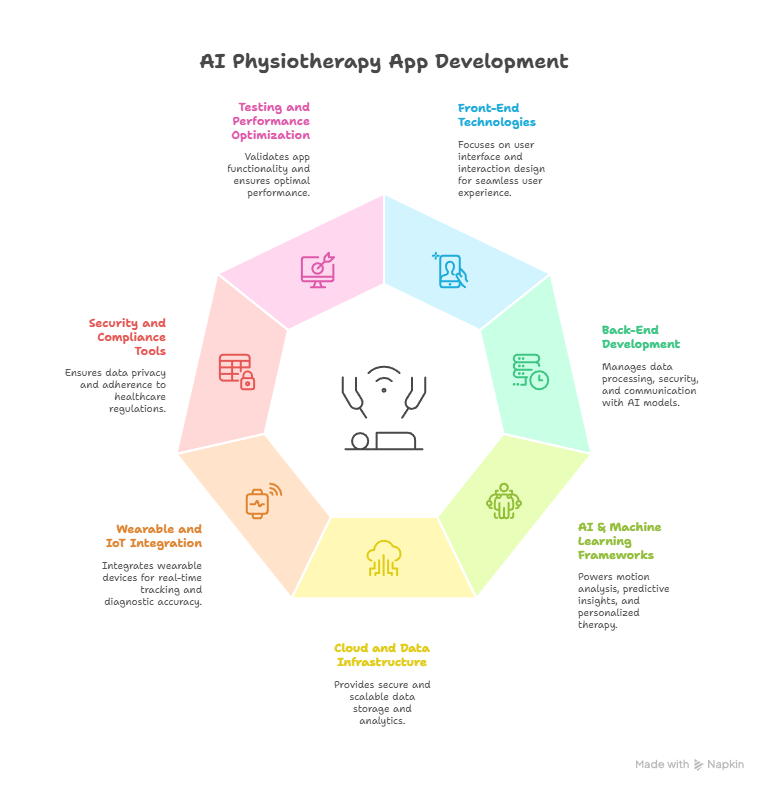
4. Cloud and Data Infrastructure
AI-driven physiotherapy apps rely heavily on data — from patient exercise videos to sensor-based movement logs. A secure and scalable cloud setup is essential for data processing and storage.
- Cloud Platforms:
- AWS, Google Cloud Platform (GCP), and Microsoft Azure provide specialized AI and healthcare solutions, including HIPAA-compliant data hosting and AI model deployment tools.
- AWS, Google Cloud Platform (GCP), and Microsoft Azure provide specialized AI and healthcare solutions, including HIPAA-compliant data hosting and AI model deployment tools.
- Data Storage & Analytics:
- BigQuery, Amazon S3, or Azure Data Lake are ideal for large-scale storage.
- Power BI or Tableau can be used for visual analytics, helping physiotherapists and admins track patient outcomes in real-time.
5. Wearable and IoT Integration
For enhanced precision and real-time tracking, integrating wearables and IoT sensors is becoming a standard in AI healthcare app development. These devices capture patient movements, heart rate, and muscular activity to improve diagnostic accuracy.
- Wearable SDKs:
- Apple HealthKit and Google Fit for fitness data integration.
- Fitbit SDK, Garmin Health API, and Xsens for advanced motion and posture tracking.
- Communication Protocols:
- Bluetooth Low Energy (BLE) and MQTT are used to ensure low-latency data transfer between mobile devices and sensors.
6. Security and Compliance Tools
Given that physiotherapy apps handle sensitive medical information, ensuring data privacy and regulatory compliance is critical.
- Encryption & Authentication:
- Implement OAuth 2.0, JWT tokens, and SSL/TLS for secure authentication and data transmission.
- Implement OAuth 2.0, JWT tokens, and SSL/TLS for secure authentication and data transmission.
- Compliance:
- Adhere to HIPAA (US), GDPR (Europe), and other regional healthcare data standards.
- Use compliance monitoring tools like Compliancy Group or Vanta to maintain ongoing audit readiness.
7. Testing and Performance Optimization
Testing ensures the AI physiotherapy app operates seamlessly across devices and conditions.
- Testing Tools:
- Appium, Selenium, and Postman for functionality and API testing.
- TensorFlow Model Analysis (TFMA) for validating AI model accuracy.
- Performance Optimization:
Continuous monitoring via Firebase Performance, New Relic, or Datadog ensures minimal latency, especially during live motion detection or video streaming sessions.
Development Process and Key Stages of Building an AI Physiotherapy App
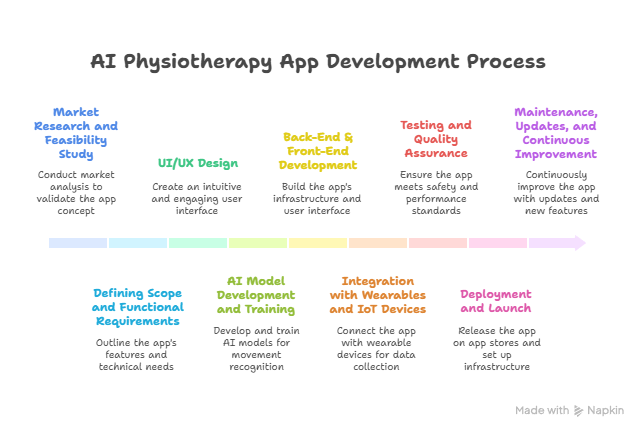
Creating a high-performing and reliable AI physiotherapy app requires a structured and strategic development approach. From conceptualization to deployment, every stage plays a crucial role in shaping the final product’s quality, accuracy, and user experience. Since these apps blend healthcare expertise with advanced technologies like machine learning and computer vision, the development process demands both medical compliance and technical precision.
Below is a detailed breakdown of the key stages involved in AI physiotherapy app development, from research and planning to launch and post-deployment maintenance.
1. Market Research and Feasibility Study
Before diving into development, it’s essential to validate the app concept through comprehensive market research. The goal here is to identify the pain points of patients, therapists, and healthcare institutions, along with analyzing existing physiotherapy and rehabilitation apps.
Key steps include:
- Competitor Analysis: Study leading physiotherapy mobile apps like Kaia Health, Sword Health, or Hinge Health to understand their feature sets, pricing models, and user feedback.
- User Research: Conduct surveys or interviews with physiotherapists and patients to uncover gaps in current digital therapy solutions.
- Feasibility Assessment: Evaluate whether your concept can leverage AI in physiotherapy to deliver measurable improvements in patient outcomes, engagement, and compliance.
This phase lays the groundwork for developing a unique value proposition that differentiates your app in the competitive digital healthcare market.
2. Defining Scope and Functional Requirements
Once you’ve identified your target audience and market opportunities, the next step is to define the app’s scope and core functionalities.
For an AI-driven physiotherapy app, this typically includes:
- AI-powered motion detection and posture analysis
- Personalized rehabilitation plans
- Virtual physiotherapist or chatbot guidance
- Integration with wearable devices and sensors
- Patient progress dashboards for therapists
- Data analytics and recovery insights
At this stage, you’ll also define user roles (patients, physiotherapists, admins) and outline technical requirements like data storage capacity, real-time processing capabilities, and compliance measures. A detailed Software Requirement Specification (SRS) document helps guide the development team and ensures alignment between business goals and technical execution.
3. UI/UX Design
The design phase focuses on creating a seamless, engaging, and accessible user experience. Since physiotherapy involves daily interaction with the app, the UI must be intuitive and visually clear, especially for older users or those recovering from injuries.
Design priorities include:
- Simple navigation for tracking exercise sessions and progress reports
- 3D motion visualization or AR-based body movement representation
- Accessible design — large icons, readable fonts, and voice assistance
- Integration of AI-guided prompts for real-time exercise correction
Prototyping tools like Figma or Adobe XD are used to create interactive mockups, allowing developers and stakeholders to visualize how the app will function before coding begins.
4. AI Model Development and Training
This is the heart of AI physiotherapy app development. Here, the AI system learns to recognize human postures, movements, and rehabilitation patterns using machine learning and computer vision.
Key steps include:
- Data Collection: Gather diverse datasets, including video recordings of physiotherapy exercises and patient movements.
- Data Labeling: Annotate body joints, movement ranges, and posture positions to train AI models.
- Model Training: Use frameworks like TensorFlow or PyTorch to train algorithms for movement recognition, recovery prediction, and anomaly detection.
- Model Validation: Ensure accuracy and reduce false feedback through continuous testing on real-world movement data.
Incorporating AI in physiotherapy allows the app to offer adaptive exercise plans — for instance, automatically adjusting difficulty levels based on patient performance and recovery trends.
5. Back-End & Front-End Development
After the AI models are ready, the actual coding begins. The front-end team builds the app interface (using tools like Flutter or React Native), while the back-end team develops the server infrastructure, APIs, and database architecture.
The development team ensures:
- Real-time posture tracking through camera or wearable data
- Secure storage of sensitive health information (in compliance with HIPAA or GDPR)
- Integration of APIs for AI processing, chatbots, and analytics
- Smooth data synchronization between users and healthcare providers
Scalability and performance optimization are vital, especially if your app will support thousands of active users performing live therapy sessions simultaneously.
6. Integration with Wearables and IoT Devices
A modern physiotherapy app development project often includes integration with wearable technologies to enhance therapy precision.
Devices like Fitbit, Apple Watch, or smart motion sensors help capture detailed movement metrics, such as joint angles, muscle activity, and heart rate.
By combining these insights with AI algorithms, the app can:
- Detect incorrect postures or incomplete movements
- Provide real-time voice or visual correction
- Offer deeper insights into recovery trends over time
Such integration improves patient engagement and ensures more accurate rehabilitation outcomes.
7. Testing and Quality Assurance
Rigorous testing ensures your AI healthcare app development project meets safety, performance, and usability standards.
Common testing approaches include:
- Functional Testing: Verifies core features like login, AI feedback, and progress tracking.
- AI Model Testing: Evaluates the accuracy and reliability of movement recognition models.
- Performance Testing: Checks for lag-free video feedback and real-time AI processing.
- Security Testing: Ensures compliance with healthcare data protection regulations.
Beta testing with a small user group — including real physiotherapists and patients — provides valuable insights for final adjustments before public release.
8. Deployment and Launch
Once testing is complete, the app is deployed on Google Play Store and Apple App Store or made available through enterprise distribution channels for healthcare providers.
It’s essential to set up:
- Cloud infrastructure (AWS, GCP, or Azure) for scalability
- Continuous Integration/Continuous Deployment (CI/CD) pipelines for seamless updates
- Analytics dashboards to track app performance and user engagement
A soft launch or pilot release with selected clinics or rehab centers can help gather feedback and ensure system stability before the full-scale launch.
9. Maintenance, Updates, and Continuous Improvement
AI-driven apps evolve over time. Continuous maintenance ensures that your physiotherapy app remains accurate, secure, and aligned with new medical practices.
This phase involves:
- Updating AI models with new exercise datasets for better accuracy
- Fixing bugs and performance issues
- Adding new features like AR-based rehabilitation or voice-controlled guidance
- Monitoring app analytics to identify engagement drop-offs or feature gaps
Regular updates not only improve patient satisfaction but also keep your app competitive in the fast-growing digital health market.
Cost of AI Physiotherapy App Development in 2025
Developing an AI physiotherapy app in 2025 involves a complex combination of technologies, compliance requirements, and advanced machine learning integrations. Consequently, estimating the cost depends on multiple variables — from the app’s functionality and AI sophistication to team expertise and platform choice.
While traditional physiotherapy app development may focus primarily on exercise tracking and teleconsultation, AI-powered apps integrate real-time motion analysis, predictive recovery analytics, and personalized therapy recommendations, making them more resource-intensive to build.
Let’s explore the key factors that influence the overall cost of AI physiotherapy app development and what businesses can expect to invest in 2025.
1. Key Cost-Influencing Factors
a. App Complexity and Features
The complexity of your app’s features is the most significant determinant of overall cost.
Basic physiotherapy apps include standard modules like appointment booking, exercise libraries, and progress tracking. However, an advanced AI healthcare app development project may include:
- AI-powered motion tracking and posture correction
- Real-time feedback using computer vision
- Personalized therapy programs using machine learning
- Wearable and IoT device integration
- Predictive analytics for recovery forecasting
- Virtual physiotherapist (chatbot or voice assistant)
- Data dashboards for clinicians
The more intelligent and interactive your app is, the more development time, data training, and testing it will require — increasing total cost.
| Feature Set | Description | Estimated Cost Range (USD) |
| Basic physiotherapy app | Exercise videos, progress tracking, reminders | $20,000 – $40,000 |
| Intermediate AI physiotherapy app | AI-assisted feedback, therapist dashboard, cloud sync | $50,000 – $90,000 |
| Advanced AI-powered app | Computer vision, predictive analytics, wearables integration | $100,000 – $250,000+ |
b. AI Model Training and Integration
Training AI models for AI in physiotherapy involves collecting large datasets of human movement, labeling data points, and developing accurate algorithms. This process often requires significant time and resources.
Costs vary depending on:
- The complexity of motion detection (basic posture vs. full skeletal tracking)
- The volume of training data required for precision
- The need for real-world testing with patients or physiotherapists
Integrating third-party APIs for computer vision (like MediaPipe or OpenCV) or pre-trained ML models can help reduce costs, but for custom models, expect additional expenses for data scientists and AI engineers.
c. Design and User Experience
An intuitive and engaging UI/UX is critical for a physiotherapy mobile app, as it directly impacts patient adoption and satisfaction.
Design costs typically depend on:
- Number of user types (patient, physiotherapist, admin)
- Custom animation for exercise visualization
- Accessibility standards (for elderly or injured users)
- Integration of real-time visual cues and progress charts
Expect $5,000 – $15,000 for a professional-grade design phase that aligns with healthcare usability guidelines.
d. Platform Choice (Android, iOS, or Cross-Platform)
Developing separately for Android and iOS doubles the effort and cost, whereas cross-platform frameworks like Flutter or React Native allow simultaneous development for both ecosystems.
- Native app development (Swift/Kotlin): Higher performance, better hardware integration, but more expensive
- Cross-platform development: Faster and more affordable, ideal for startups
Average cost difference:
- Native apps — $80,000 – $150,000+
- Cross-platform — $50,000 – $100,000
e. Team Composition and Expertise
The type of team you hire greatly affects pricing. A freelance-based team might cost less upfront but lacks consistency, while a professional AI app development company ensures end-to-end delivery, including compliance and long-term support.
| Team Type | Typical Cost Range (USD) | Best For |
| Freelancers | $25,000 – $60,000 | MVP or small-scale prototype |
| In-house team | $70,000 – $150,000 | Ongoing healthcare projects |
| Dedicated AI app development company | $80,000 – $250,000+ | Scalable, compliant, and feature-rich apps |
Partnering with a company experienced in AI healthcare app development ensures better outcomes in accuracy, data privacy, and scalability.
f. Data Security and Compliance
Healthcare applications must comply with strict regulations like HIPAA (US), GDPR (EU), and HL7 standards. Implementing these measures — including data encryption, secure APIs, and multi-layer authentication — can increase costs by 10–20% of the total development budget.
However, ensuring compliance from the start prevents costly legal issues later and builds user trust in the product.
g. Maintenance and Updates
Once the app is launched, ongoing maintenance is crucial for bug fixes, AI model updates, feature enhancements, and compliance renewals.
Most development agencies recommend allocating 15–25% of the initial development cost annually for maintenance.
For example:
If your AI physiotherapy app development cost is $120,000, you should expect to spend around $18,000 – $30,000 per year on maintenance and improvements.
2. Average Development Cost Breakdown
Here’s a simplified breakdown of how costs may be distributed across different phases of development:
| Development Stage | Estimated Cost Range (USD) |
| Research & Planning | $5,000 – $10,000 |
| UI/UX Design | $5,000 – $15,000 |
| AI Model Development | $20,000 – $60,000 |
| Front-End & Back-End Development | $30,000 – $100,000 |
| Wearable Integration | $10,000 – $25,000 |
| Testing & QA | $5,000 – $15,000 |
| Compliance & Security | $10,000 – $30,000 |
| Deployment & Maintenance | $10,000 – $20,000 |
Estimated Total Cost (2025): Between $70,000 and $250,000+, depending on complexity, AI depth, and developer location.
3. Cost Optimization Tips
If you’re aiming to reduce expenses without compromising app quality, consider the following strategies:
- Start with an MVP (Minimum Viable Product): Focus on essential AI features and expand later.
- Use pre-trained AI models: Leverage existing frameworks for motion tracking and analytics.
- Outsource development to countries offering cost-effective expertise (e.g., India, Eastern Europe).
- Adopt cloud-based AI services from AWS, Azure, or Google to avoid heavy infrastructure costs.
- Invest in cross-platform development for faster launch and reduced overhead.
These optimizations can reduce total project cost by up to 30–40%, making the process more accessible for startups and healthcare innovators.
Future Trends in AI Physiotherapy and What’s Next for Digital Rehabilitation

The physiotherapy landscape is entering an era where artificial intelligence, wearable technology, and personalized healthcare converge to create smarter, more responsive rehabilitation experiences. As we move deeper into 2025 and beyond, AI physiotherapy app development is poised to redefine how recovery programs are delivered, monitored, and optimized.
Emerging trends such as generative AI, motion intelligence, AR/VR-assisted rehab, and predictive healthcare analytics are setting new benchmarks in digital physiotherapy — empowering both patients and clinicians with unprecedented levels of insight, efficiency, and accessibility.
Let’s explore the top trends shaping the future of physiotherapy and digital rehabilitation.
1. Generative AI for Personalized Recovery Plans
Generative AI, known for its ability to create dynamic and adaptive outputs, is revolutionizing AI in physiotherapy. Instead of static exercise programs, future physiotherapy apps will use generative models to design real-time, personalized therapy sessions tailored to each patient’s current recovery stage, pain level, and motion capabilities.
For instance:
- If a patient struggles with a specific stretch, the AI system can generate alternative exercises targeting the same muscle group with reduced strain.
- The app can dynamically adjust session intensity based on user feedback and biometric data from wearables.
This adaptive approach enables continuous personalization, resulting in faster recovery and improved patient motivation. Generative AI will also help physiotherapists automate therapy customization, allowing them to focus more on patient communication and less on manual adjustments.
2. Computer Vision and 3D Motion Analytics
While today’s physiotherapy mobile apps already utilize basic posture recognition, the future lies in 3D motion analysis powered by computer vision and AI. Advanced models will use camera-based skeletal mapping and motion sensors to capture fine-grained details — such as muscle symmetry, joint flexibility, and range of motion — in real time.
Key benefits include:
- Ultra-accurate posture tracking using depth sensors and 3D visualization
- Early detection of incorrect rehabilitation techniques, preventing injury relapse
- Gamified feedback systems where patients see their performance visualized through digital avatars
As hardware like LiDAR-equipped smartphones and smart cameras become mainstream, 3D motion tracking will turn home-based physiotherapy into a near-clinical experience.
3. Integration of AR and VR in Digital Rehabilitation
Augmented Reality (AR) and Virtual Reality (VR) are emerging as powerful tools for immersive rehabilitation. When integrated into AI physiotherapy app development, they provide an engaging and interactive therapy environment where patients can perform guided exercises with visual overlays or virtual environments.
Applications include:
- AR-guided posture correction: The camera projects digital markers onto the patient’s body to guide proper alignment.
- VR rehabilitation simulations: Patients perform virtual activities like walking in a park or climbing stairs to restore balance and coordination.
- Gamified therapy sessions: Turning physiotherapy routines into engaging challenges that boost adherence.
The combination of AI in physiotherapy and immersive tech not only enhances motivation but also allows therapists to collect richer movement data for precision-based recovery tracking.
4. Predictive Analytics and Preventive Care
As AI healthcare app development continues to evolve, predictive analytics will play a pivotal role in both rehabilitation and prevention. By analyzing long-term patient data — including muscle strength, mobility patterns, and medical history — AI can predict potential relapses or complications before they occur.
For example:
- The app could alert users about improper movement patterns that may lead to re-injury.
- Physiotherapists could use predictive dashboards to adjust therapy intensity based on patient risk profiles.
Such proactive insights empower patients to take preventive actions early, reducing long-term therapy costs and improving overall treatment success rates.
5. IoT-Driven Connected Physiotherapy Ecosystems
The future of physiotherapy app development lies in IoT-enabled ecosystems, where wearable devices, smart sensors, and AI apps communicate seamlessly to provide a holistic recovery experience.
Imagine a system where:
- A smart brace tracks muscle activity.
- The mobile app processes this data through AI algorithms.
- The therapist receives instant alerts on posture deviations or incomplete movements.
IoT integration will transform physiotherapy from a reactive process into a continuous monitoring ecosystem, ensuring 24/7 support and accurate data flow between patients, devices, and clinicians.
6. Voice-Enabled Digital Assistants for Hands-Free Therapy
Voice assistants powered by Natural Language Processing (NLP) will become a standard feature in AI physiotherapy apps. They’ll guide patients through exercises, answer questions, and provide motivational feedback in real-time.
For instance:
- “You’re doing great — keep your shoulders straight for 5 more seconds.”
- “Would you like to repeat this exercise or move to the next one?”
Voice guidance adds convenience and accessibility, especially for patients with limited mobility or vision impairment, making therapy more inclusive and user-friendly.
7. AI-Driven Emotional and Cognitive Monitoring
Rehabilitation isn’t purely physical — emotional and cognitive states play a crucial role in recovery. Emerging AI tools can analyze facial expressions, speech tone, and behavioral patterns to gauge patient motivation and mental well-being.
By integrating AI in physiotherapy with emotion recognition technologies:
- The app can adapt exercise difficulty or send motivational prompts.
- Physiotherapists can receive emotional engagement reports to personalize interactions.
This trend aligns with the broader healthcare movement toward holistic wellness, combining physical and psychological recovery for better overall outcomes.
8. Blockchain for Secure Data Exchange
As physiotherapy apps collect sensitive patient data — including medical history, biometrics, and movement analytics — data privacy becomes paramount. Blockchain integration is emerging as a trusted method for securing digital health records.
Blockchain ensures:
- Decentralized data storage, reducing vulnerability to breaches
- Transparent access control, where patients decide who can view their data
- Tamper-proof medical histories, critical for compliance and medico-legal documentation
By merging blockchain with AI healthcare app development, future physiotherapy platforms can guarantee both innovation and data trustworthiness.
9. Cross-Platform AI and Cloud Interoperability
With healthcare becoming increasingly digital, interoperability between platforms — mobile apps, web dashboards, wearables, and EHR systems — is crucial. Cloud-based AI physiotherapy apps will enable data synchronization across devices and healthcare providers in real-time.
For example:
- Patient exercises performed on a smartphone can automatically update the therapist’s dashboard.
- Hospitals can access aggregated analytics to improve rehabilitation programs.
This connected cloud ecosystem ensures consistency in care delivery and accelerates clinical decision-making.
10. Towards Autonomous Digital Rehabilitation
The ultimate vision for AI physiotherapy app development is autonomous digital rehabilitation — where AI-driven systems guide, monitor, and optimize therapy independently with minimal human intervention.
Patients will have access to:
- Fully automated progress tracking
- Adaptive exercise plans powered by generative AI
- Real-time motion correction through advanced sensors
- 24/7 feedback and monitoring through AI assistants
While physiotherapists will always remain central to care, autonomous systems will amplify their capacity, enabling them to oversee multiple patients remotely without compromising quality.
Conclusion
The transformation of physiotherapy through AI-powered innovation marks a significant leap toward smarter, data-driven, and patient-centered healthcare. What was once limited to in-person clinic visits is now evolving into a digitally connected rehabilitation ecosystem, where intelligent apps, motion sensors, and real-time analytics work together to deliver precise and personalized recovery experiences.
In 2025, AI physiotherapy app development stands at the crossroads of technology and wellness — integrating the best of machine learning, computer vision, and human expertise to reshape how physical therapy is delivered. The outcome isn’t just convenience; it’s empowerment — giving patients more control over their healing process while enabling therapists to make more informed, proactive decisions.
Let's Convert Your Business Idea Into Success!
Free Consultation from Top Industry Experts
Let’s Build Your Dream App!
Share article on :



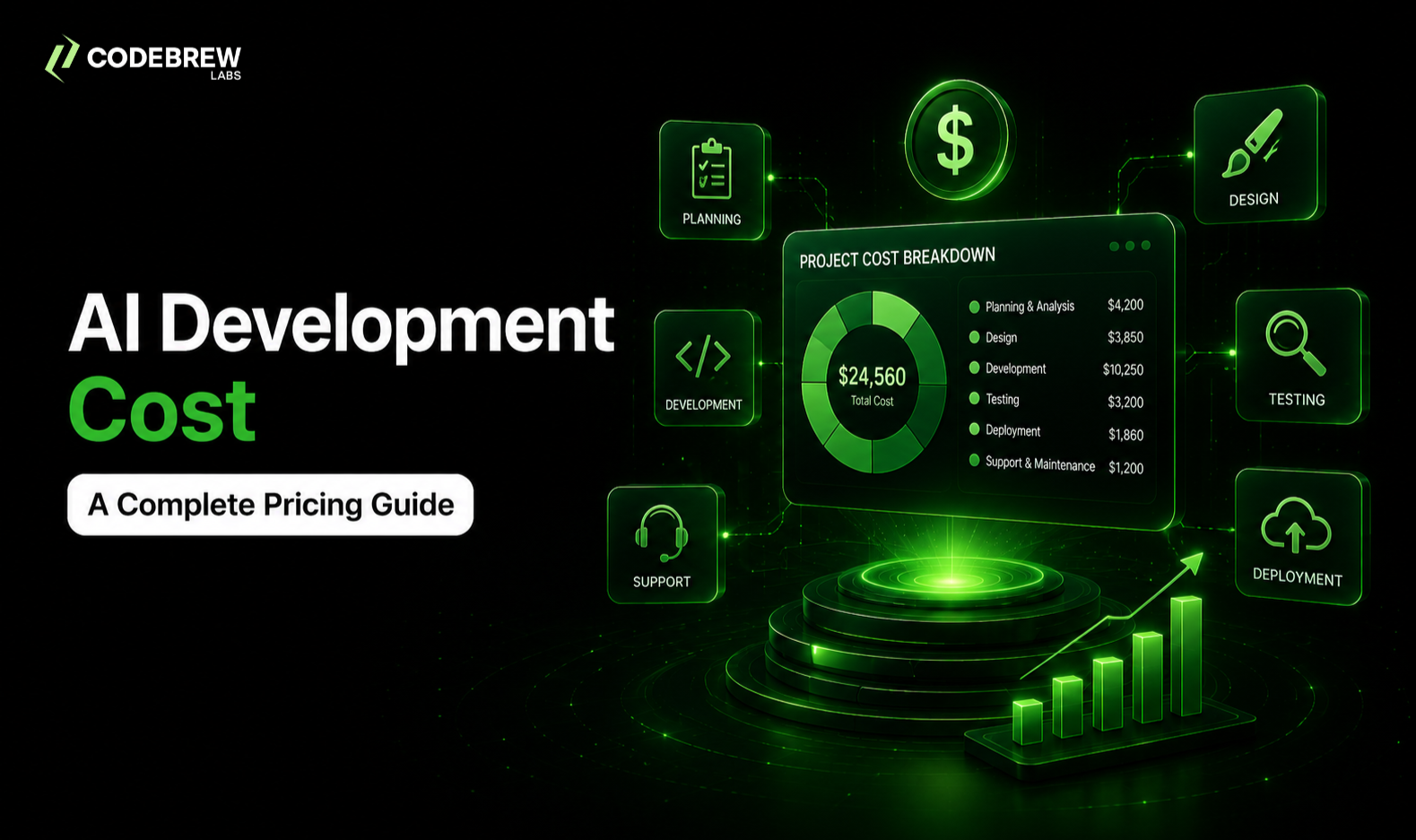

Ready To Fuel Your Vision With AI-Powered Innovation?


Level- 18, Dubai World Trade Centre Tower, Sheikh Rashid Tower, Sheikh Zayed Rd, Dubai, UAE
business@code-brew.com +971-55-645-7972
Plot no I - 36, Sector 83 Alpha, Mohali SAS Nagar 140308
business@code-brew.com +91-771-976-8427
Av. Miguel Hidalgo y Costilla 1995, Arcos Vallarta, 44600 Guadalajara, Mexico
business@code-brew.com +1(213)2614953
4231 Balboa Ave #512 San Diego, CA 92117 United States
business@code-brew.com +1(213)2614953
2nd floor, College House, 17 King Edwards Rd, London HA4 7AE, UK
business@code-brew.com +44 (20) 82644493
Partner With Experts Who Leverage AI & Tech To Transform Ideas Into Market-Leading Solutions.
Wait! Looking for Right Technology Partner For Your Business Growth?
It's Time To Convert Your Business Idea Into Success!
Get Free Consultation From Top Industry Experts:
I would like to keep it to myself