Table of Content

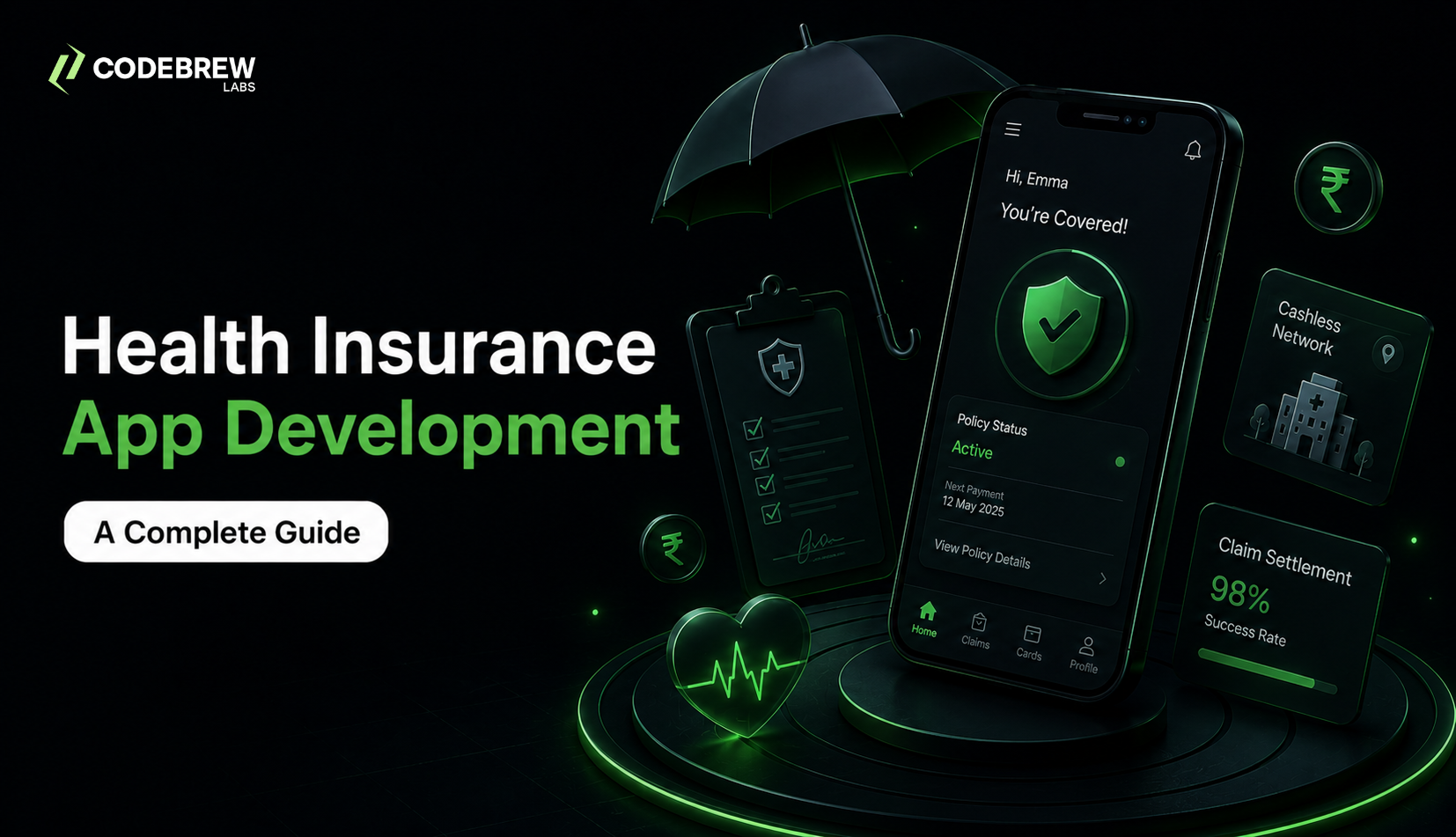
The healthcare industry is quickly moving toward digital solutions as users want easier ways to manage their insurance and medical needs. The global digital health market is expected to reach $491.62 billion by 2026, showing strong growth in this space.
Table of Content
Health insurance apps are leading this change by replacing paperwork with simple, easy-to-use platforms. They help users check policies, file claims, and manage everything in one place.
In this guide, we’ll cover how these apps work, their key features, and what it takes to build a secure and scalable solution, including insights into insurance app development.
What Is a Health Insurance App?
A health insurance app is a mobile or web application that allows users to manage their insurance plans in one place. Instead of dealing with paperwork, phone calls, or long wait times, users can access everything they need directly from their phone.
In simple terms, it’s like having your insurance company in your pocket.
With a health insurance app, users can:
- View their insurance policy details anytime
- Check coverage, benefits, and limits
- Download or show a digital insurance ID card
- File and track claims without paperwork
- Access important documents whenever needed
These apps are designed to make insurance easier to understand and use. They remove confusion by organizing all information in a clear and simple way.
Health insurance apps are useful for:
- Individuals managing their own plans
- Families handling multiple members under one policy
- Employees using employer-provided insurance
- Even insurance providers who want to offer better service
Overall, a health insurance app turns a complex and often frustrating process into something simple, fast, and easy to manage.
How Health Insurance Apps Work
Health insurance apps are designed to simplify a process that is usually seen as complicated. Instead of dealing with paperwork and long customer support calls, everything is organized into a few simple steps inside the app.
Here’s how it typically works:
1. User Sign-Up and Profile Setup
The process starts with creating an account. Users sign up using basic details like their name, email, phone number, and sometimes policy information.
Once logged in, they can set up their profile by adding personal details, family members (if covered under the same plan), and linking their insurance policy. This step helps the app personalize the experience and show only relevant information.
2. Linking or Exploring Insurance Plans
After setting up the profile, users can either link an existing insurance policy or explore available plans if they’re new.
The app organizes all policy details in one place—coverage limits, benefits, inclusions, and exclusions—so users don’t have to go through long documents. This makes it much easier to understand what is covered and what is not.
3. Filing a Claim Digitally
When a user needs to file a claim, the app provides a simple process to do it online. Instead of filling out physical forms, users can upload documents, medical bills, and required details directly through the app.
The system guides users step-by-step, reducing confusion and helping them submit claims correctly the first time.
4. Claim Review and Processing
Once the claim is submitted, it is reviewed by the insurance provider. The app updates the status as the claim moves through different stages like verification, approval, or rejection.
This process is much faster than traditional methods because everything is handled digitally, and users don’t have to follow up manually.
5. Real-Time Claim Tracking and Updates
Users can track their claim status directly in the app. Instead of calling support, they can see updates in real time—whether the claim is under review, approved, or processed.
Notifications are also sent to keep users informed, which adds transparency and reduces uncertainty.
6. Accessing Documents and Support
All important documents—like policy details, claim history, and ID cards—are stored in one place within the app. Users can access them anytime without searching through emails or physical files.
If users need help, they can connect with support directly through the app, making the overall experience smooth and hassle-free.
Overall, health insurance apps take a process that used to be slow and confusing and turn it into something simple, organized, and easy to manage from start to finish.
Turn complex insurance workflows into a simple, easy-to-use mobile app experience for your users
Key Features Users Love
Health insurance apps are built to remove confusion and give users quick access to everything they need. The best apps focus on simplicity, clarity, and control—so users don’t feel overwhelmed by insurance details.
Here are the features that users find most helpful:
1. Easy Access to Policy Details Anytime
One of the most useful features is having all policy information in one place. Users can quickly check what their plan covers, including doctor visits, hospital stays, and other benefits.
Instead of going through long documents or calling support, everything is clearly organized inside the app. This helps users make informed decisions without confusion.
2. Digital Insurance ID Cards
Users no longer need to carry physical insurance cards. The app provides a digital ID card that can be shown directly from the phone.
This is especially helpful during doctor visits or emergencies, where quick access to insurance details can save time and avoid stress.
3. Simple Claim Submission
Filing a claim is one of the most important features, and apps make this process much easier. Users can upload bills, prescriptions, and other documents directly through the app.
Step-by-step guidance ensures that users fill in the right information, reducing errors and speeding up the approval process.
4. Real-Time Claim Tracking
After submitting a claim, users can track its progress in real time. The app shows updates at every stage, so users always know what’s happening.
This transparency removes the need for repeated follow-ups and gives users peace of mind.
5. Notifications and Alerts
Health insurance apps send timely notifications to keep users informed. These can include claim updates, policy renewals, payment reminders, or important announcements.
This feature helps users stay on top of their insurance without having to remember every detail on their own.
6. In-App Customer Support
If users have questions or face issues, they can get help directly within the app. This may include chat support, FAQs, or direct contact options.
Having support available in the same place where users manage their insurance makes the experience much more convenient.
7. Document Storage and Easy Access
All important documents—like policy papers, claim history, and receipts—are stored securely in the app. Users can access them anytime without searching through emails or physical files.
This makes it easier to stay organized and quickly find what’s needed when required.
Together, these features make health insurance apps simple, accessible, and user-friendly. They turn a traditionally complex system into something people can easily understand and manage.
Build a feature-rich health insurance app that delivers clarity, speed, and convenience to every user
AI-Powered Features in Health Insurance Apps
Health insurance apps are becoming smarter with the help of AI (Artificial Intelligence). While users may not see the technology directly, it plays a big role in making the app faster, more accurate, and easier to use.
AI helps reduce manual work, speeds up processes like claims, and gives users more personalized support. The goal is simple: make insurance less confusing and more efficient.
Here’s how AI is used in health insurance apps:
| AI Feature | What It Does for Users |
| Smart Claim Processing | Automatically reviews claims and speeds up approvals by checking documents and details quickly. |
| Fraud Detection Systems | Identifies unusual patterns or suspicious claims to prevent fraud and protect users and insurers. |
| Personalized Plan Recommendations | Suggests insurance plans based on user needs, age, and past data, making it easier to choose the right coverage. |
| AI Chatbots for Instant Support | Provides quick answers to common questions without waiting for human support. |
| Risk Assessment Models | Analyzes user data to help insurers understand risk levels and offer better pricing or coverage options. |
| Document Recognition (OCR) | Reads uploaded bills and documents automatically, reducing manual entry and errors. |
These features work in the background to make the entire experience smoother. For users, it simply means faster claims, better support, and less confusion—without needing to understand the technology behind it.
Benefits of Health Insurance Apps
Health insurance apps are not just about convenience—they actually improve how insurance works for both users and providers. Behind the simple interface, there are systems and processes that make everything faster, clearer, and more efficient.
Let’s look at the key benefits and how these apps make them possible:
1. Faster Claims Through Automated Processing Systems
One of the biggest improvements is in how quickly claims are handled. Instead of manual paperwork and long processing times, apps use automated systems to collect, verify, and forward claim data instantly.
This reduces delays and speeds up approvals. For users, it means less waiting and quicker reimbursements, especially during urgent situations.
2. Better Transparency with Real-Time Tracking
Health insurance apps give users full visibility into their claims and policy details. Every step—from submission to approval—is updated in real time.
This is made possible through connected backend systems that track claim progress and update the app automatically. Users no longer have to call support or guess what’s happening.
3. Reduced Paperwork Through Complete Digitization
Traditional insurance processes involve a lot of paperwork. Apps replace this with digital forms, document uploads, and online records.
This not only saves time but also reduces errors caused by missing or incorrect paperwork. Everything is stored securely and can be accessed anytime, making the process much more efficient.
4. Improved User Engagement with Smart Notifications
Apps keep users informed through timely alerts and reminders. Whether it’s a claim update, policy renewal, or required action, users are notified instantly.
These notifications are driven by system triggers that respond to user activity and deadlines. This helps users stay engaged and avoid missing important updates.
5. More Accurate Data Handling and Reduced Errors
Since most of the process is digital, there is less chance of human error. Information entered by users is validated automatically, and documents are checked through smart systems.
This improves accuracy in claims, policy details, and user records—leading to fewer rejections and smoother processing.
6. Cost Efficiency for Insurance Providers
From a business perspective, these apps reduce operational costs by minimizing manual work. Tasks like claim processing, customer support, and document handling are partially automated.
This allows insurance companies to serve more users without increasing overhead, making the system more efficient overall.
7. Better Decision-Making Through Data Insights
Health insurance apps collect useful data on user behavior, claims, and usage patterns. This data helps providers improve their services and offer better plans.
For example, insurers can identify common claim types, improve coverage options, and create more personalized offerings based on real user needs.
8. Stronger Customer Trust Through Consistent Experience
When users can easily access their information, track claims, and get quick support, it builds trust over time.
This consistency is powered by reliable systems that ensure everything works smoothly. As a result, users feel more confident in both the app and the insurance provider.
Overall, health insurance apps make the entire system more efficient, transparent, and user-friendly. What used to be a slow and confusing process is now faster, clearer, and much easier to manage.
Transform insurance operations with an app built for efficiency, transparency, and long-term user trust
Health Insurance App Development Process
Building a health insurance app requires more than just coding—it involves understanding insurance workflows, user behavior, and strict data handling requirements. That’s why most businesses choose to work with an experienced development company that can handle everything from planning to launch.
Here’s how the process typically works when you partner with a professional team:
1. Understanding Business Model and Insurance Workflows
The first step is a deep discussion about your business. The development team works closely with you to understand how your insurance service operates—whether you’re an insurer, broker, or startup.
They map out key workflows like policy management, claims processing, and user interactions. This ensures the app is built around real business needs, not just generic features.
2. Planning User Journeys and App Structure
Once the requirements are clear, the team designs how users will interact with the app. This includes defining user journeys like:
- Viewing policies
- Filing claims
- Tracking updates
The goal is to make complex insurance processes feel simple. Clear navigation and logical flows are planned so users can complete tasks without confusion.
3. Designing a Clean and User-Friendly Interface
Designers then create the visual layout of the app. Since insurance can already feel overwhelming, the focus is on making the interface clean, simple, and easy to understand.
Important information is highlighted clearly, and unnecessary complexity is removed. This ensures that users of all age groups can use the app comfortably.
4. Development of Core Systems and Panels
At this stage, the development team starts building the app. This usually includes:
- User app (for customers)
- Admin panel (for managing users, claims, and policies)
- Backend systems (to handle data, workflows, and integrations)
They also integrate key features like claim processing, document uploads, notifications, and secure payments.
5. Integration with External Systems
Health insurance apps often need to connect with other systems, such as:
- Hospital networks
- Payment gateways
- Insurance databases
The development team ensures these integrations work smoothly so data flows correctly between systems without delays or errors.
6. Testing for Accuracy, Performance, and Compliance
Before launch, the app goes through thorough testing. This includes checking:
- Whether all features work correctly
- If the app performs well under load
- Whether user data is handled securely
Since insurance involves sensitive data, compliance and security testing are especially important at this stage.
7. Launch and Deployment
Once everything is tested and approved, the app is launched on platforms like iOS and Android. The development company handles the entire deployment process, including meeting app store guidelines.
After launch, users can start downloading the app and using its features.
8. Continuous Support and Feature Upgrades
A good development partner continues to support the app after launch. This includes fixing issues, improving performance, and adding new features based on user feedback.
As your business grows, the app can also be scaled to handle more users and expanded with advanced features like AI and analytics.
Overall, working with a development company makes the process structured and stress-free. Instead of dealing with technical challenges, you get a guided approach that turns your idea into a fully functional, reliable product.
How to Choose the Right Development Partner
Choosing the right development partner is a critical step in building a successful health insurance app. Since these apps deal with sensitive data, complex workflows, and strict regulations, you need a team that understands both technology and the insurance domain.
The right partner will not just build your app—they will guide you, help you avoid costly mistakes, and ensure your product is ready for real users.
1. Look for Experience in Healthcare and Insurance Apps
Health insurance apps are very different from regular apps. They involve claims processing, policy management, and compliance requirements.
A development partner with experience in healthcare or insurance understands these complexities and can design solutions that actually work in real-world scenarios. This reduces risk and speeds up development.
2. Strong Focus on Data Security and Compliance
Since user data includes personal and financial information, security is a top priority. Your development partner should follow best practices for data protection, secure authentication, and safe data storage.
They should also understand compliance requirements so your app meets industry standards and builds user trust.
3. Ability to Build Scalable and Flexible Systems
Your app should be able to grow as your business grows. This means handling more users, more claims, and more data without slowing down.
A good development company will use scalable architecture and cloud-based systems so your app can expand smoothly over time.
4. Expertise in AI and Automation
Modern health insurance apps are moving toward automation—especially in areas like claims, support, and recommendations.
A partner with AI expertise can help you add smart features that improve efficiency and user experience, without making the app complicated.
5. End-to-End Development and Long-Term Support
You need more than just development—you need a partner who can handle everything from planning to post-launch support.
This includes design, development, testing, deployment, and continuous updates. Having one team manage everything ensures consistency and better results.
6. Why Businesses Choose Code Brew Labs
When it comes to building secure and scalable healthcare solutions, Code Brew Labs is a trusted technology partner.
With 13 years of experience in technology and 4 years of focused experience in AI, they bring a strong balance of reliability and innovation. They have successfully transformed 2,600+ business ventures and delivered 25+ enterprise-level AI solutions.
Their experience also includes 50+ Fortune 100 technology partnerships, showing their ability to meet high standards and handle complex projects.
What sets them apart is their long-term approach:
- Expertise in generative AI, predictive systems, and automation
- Strong focus on scalable, cloud-native architecture
- Clean and efficient data pipelines
- Continuous monitoring and lifecycle optimization
- Solutions built to be enterprise-ready and future-proof
As an end-to-end development partner, Code Brew Labs helps businesses go beyond just launching an app—they help build a complete, scalable digital product that grows with your vision.
Choosing the right partner can make the entire journey smoother, faster, and more successful. With the right team, you’re not just building an app—you’re building a reliable digital insurance solution for the future.
Choose a development partner who understands healthcare, compliance, and scalable app development from day one
Challenges in Health Insurance App Development (And How to Overcome Them)
Building a health insurance app comes with a unique set of challenges. Unlike regular apps, these platforms deal with sensitive data, complex processes, and strict regulations. If not handled properly, these challenges can affect both user experience and business operations.
The key is to understand these challenges early and work with a development partner who knows how to solve them.
1. Managing Complex Insurance Policies and Workflows
Health insurance policies can be difficult to understand, with multiple terms, conditions, and coverage rules. Translating this complexity into a simple app experience is a major challenge.
To solve this, development teams design structured workflows that break down policy details into clear, easy-to-read sections. Smart categorization and guided user flows help users understand their coverage without confusion.
2. Ensuring Data Privacy and Security
Health insurance apps handle highly sensitive information, including personal details, medical records, and financial data. Any security gap can lead to serious trust issues.
This is addressed by implementing strong security measures such as encrypted data storage, secure login systems, and protected APIs. Regular security testing and monitoring also help keep the system safe from threats.
3. Handling Claim Accuracy and Reducing Errors
Claims processing is one of the most critical parts of the app. Incorrect data or missing information can lead to delays or rejections.
To overcome this, apps are built with validation systems that check user inputs and guide them during submission. Automated checks and structured forms help ensure that claims are accurate and complete.
4. Integrating with Legacy Systems
Many insurance providers still use older systems that were not designed for modern apps. Connecting a new app with these legacy systems can be complex.
Experienced development teams solve this by building integration layers that allow smooth communication between old and new systems. This ensures data flows correctly without disrupting existing operations.
5. Maintaining Real-Time Updates and Transparency
Users expect real-time updates on claims and policy changes. However, ensuring accurate and instant updates across systems can be challenging.
This is handled through connected backend systems that sync data continuously. Notifications and tracking features are then built on top of this system to keep users informed at every stage.
6. Designing for All User Groups
Health insurance apps are used by people of all ages, including those who may not be comfortable with technology. Creating an app that works for everyone is not easy.
To solve this, developers focus on simple layouts, clear language, and guided steps. The goal is to make even complex actions—like filing a claim—feel easy and manageable.
7. Keeping the App Scalable and High-Performing
As more users join the platform, the app must handle increased data, traffic, and activity without slowing down.
This challenge is addressed by using scalable architecture and cloud-based systems. Regular performance monitoring ensures the app continues to run smoothly as it grows.
8. Building User Trust in a Digital Platform
Insurance is a trust-based service, and moving it to a digital platform can make some users hesitant.
To build trust, apps provide clear information, transparent processes, secure systems, and consistent performance. Over time, a smooth and reliable experience helps users feel confident using the platform.
Overall, while health insurance app development comes with several challenges, each one has a clear solution when handled by the right team. With proper planning and execution, these challenges can be turned into strengths that improve both user experience and business performance.
Cost of Health Insurance App Development
The cost of developing a health insurance app depends on how simple or advanced you want the platform to be. Since these apps involve claims, policy management, user data, and integrations, the cost can vary based on features and complexity.
When you partner with a development company, the pricing is usually influenced by:
- Number of features (basic vs advanced)
- Platforms (iOS, Android, web)
- Level of security and compliance required
- Integrations with external systems (hospitals, payment systems, databases)
- Design quality and user experience
- Post-launch support and maintenance
It’s important to see this as a long-term investment. A well-built health insurance app can improve efficiency, reduce operational costs, and enhance customer experience over time.
Here’s a general cost breakdown:
| App Type | What’s Included | Estimated Cost (USD) |
| Basic App (MVP) | Core features like user signup, policy viewing, and basic claim submission | $30,000 – $60,000 |
| Mid-Level App | Advanced features like claim tracking, notifications, document upload, and user dashboard | $60,000 – $120,000 |
| Advanced App | AI features, automation, integrations, enhanced UX, and multiple user panels | $120,000 – $250,000+ |
| Enterprise-Level Solution | Full-scale platform with deep integrations, analytics, automation, and high scalability | $250,000 – $500,000+ |
These are estimated ranges, and the final cost depends on your specific requirements and business goals.
A reliable development partner will help you prioritize features, control costs, and build a solution that delivers strong value without unnecessary expenses.
Future of Health Insurance Apps
Health insurance apps are evolving quickly as technology improves and user expectations grow. What started as a simple way to view policies and file claims is now turning into a complete digital healthcare experience.
In the coming years, these apps will become smarter, more connected, and more focused on prevention rather than just treatment.
1. More Automation in Claims and Approvals
The claims process will become even faster with deeper automation. Instead of manual reviews, more steps will be handled instantly by smart systems.
This means users can expect quicker approvals, fewer delays, and a smoother overall experience when filing claims.
2. AI-Driven Personalized Insurance Plans
Health insurance apps will move toward offering highly personalized plans. Based on user data, lifestyle, and medical history, apps will suggest coverage that fits individual needs.
This helps users avoid overpaying for unnecessary coverage while ensuring they are properly protected.
3. Integration with Wearable Devices and Health Data
Apps will start connecting with wearable devices like fitness trackers and smartwatches. This allows insurers to understand user health patterns in real time.
In return, users may get benefits such as lower premiums, rewards for healthy behavior, or customized wellness programs.
4. Shift Toward Preventive Healthcare
Instead of focusing only on treatment, future apps will help users stay healthy in the first place. Features like health tracking, early risk alerts, and wellness tips will become more common.
This shift benefits both users and insurers by reducing long-term healthcare costs.
5. Faster and Smarter Customer Support
Customer support will become more efficient with AI-powered assistants that can handle most queries instantly. For more complex issues, users will still have access to human support when needed.
This ensures quick help without long waiting times.
6. Seamless Integration with Healthcare Ecosystems
Health insurance apps will connect more closely with hospitals, clinics, and telehealth services. Users will be able to book appointments, consult doctors, and manage insurance—all within one platform.
This creates a complete, connected healthcare experience.
7. Greater Focus on User Experience and Simplicity
As competition increases, companies will focus more on making their apps simple and easy to use. The goal will be to remove confusion and make insurance feel less complicated.
Clear interfaces, guided steps, and personalized dashboards will become standard.
Overall, the future of health insurance apps is centered around simplicity, speed, and personalization. These apps are not just improving how insurance works—they are shaping how people manage their health in a more connected and proactive way.
Conclusion
Health insurance has always been seen as complex and time-consuming—but that’s quickly changing with the rise of digital solutions. Health insurance apps are making it easier for people to understand their coverage, file claims, and stay in control of their policies without stress.
From faster claim processing and real-time updates to AI-powered features and personalized plans, these apps are transforming how users interact with insurance. At the same time, they help businesses improve efficiency, reduce costs, and deliver better customer experiences.
However, building a successful health insurance app requires more than just an idea. It involves careful planning, strong security, smooth integrations, and a clear focus on user experience.
That’s where choosing the right development partner becomes important. With an experienced team like Code Brew Labs, businesses can build secure, scalable, and future-ready solutions without dealing with the technical complexities on their own.
If you’re planning to step into this space, now is the right time. With the right approach and the right partner, you can create a solution that not only simplifies insurance but also improves how people manage their health every day.
Frequently Asked Questions (FAQs)
1. Can users compare different insurance plans within the app?
Yes, many health insurance apps allow users to compare multiple plans side by side. This helps them understand differences in coverage, pricing, and benefits so they can choose what fits their needs best.
2. Is it possible to renew policies directly through the app?
Yes, users can renew their insurance policies within the app. They receive reminders before expiry and can complete the renewal process in just a few steps without paperwork.
3. Can employers use health insurance apps for their teams?
Absolutely. Many apps offer features for businesses to manage employee insurance plans, track coverage, and handle claims more efficiently in one place.
4. Do health insurance apps support multiple users under one account?
Yes, users can add family members under a single account. This makes it easier to manage policies, claims, and documents for everyone in one place.
5. Can users access hospital or doctor networks through the app?
Many apps provide a list of partnered hospitals and healthcare providers. Users can check which hospitals are covered under their plan and make informed decisions when seeking care.
6. What happens if a claim is rejected?
If a claim is rejected, the app usually provides a clear reason. Users can review the details, correct any issues, and in some cases, resubmit the claim with proper documentation.
7. How often should a health insurance app be updated?
Regular updates are important to improve performance, fix issues, and add new features. Most apps are updated frequently based on user feedback and changing business needs.
Let's Convert Your Business Idea Into Success!
Free Consultation from Top Industry Experts
Let’s Build Your Dream App!
Share article on :



Ready To Fuel Your Vision With AI-Powered Innovation?


Level- 18, Dubai World Trade Centre Tower, Sheikh Rashid Tower, Sheikh Zayed Rd, Dubai, UAE
business@code-brew.com +971-55-645-7972
Plot no I - 36, Sector 83 Alpha, Mohali SAS Nagar 140308
business@code-brew.com +91-771-976-8427
Av. Miguel Hidalgo y Costilla 1995, Arcos Vallarta, 44600 Guadalajara, Mexico
business@code-brew.com +1(213)2614953
4231 Balboa Ave #512 San Diego, CA 92117 United States
business@code-brew.com +1(213)2614953
2nd floor, College House, 17 King Edwards Rd, London HA4 7AE, UK
business@code-brew.com +44 (20) 82644493
Partner With Experts Who Leverage AI & Tech To Transform Ideas Into Market-Leading Solutions.
Wait! Looking for Right Technology Partner For Your Business Growth?
It's Time To Convert Your Business Idea Into Success!
Get Free Consultation From Top Industry Experts:
I would like to keep it to myself